The Amazon Travel Adapter Secret: Why 55+ Men Are a Hidden Gold Mine
What if the most profitable customers in the Amazon travel adapter category are not Gen Z shoppers, but men over 55?

As a U.S.-based Amazon seller and importer sourcing consumer electronics from China, I pay close attention to something many product researchers overlook: who is actually buying a product, why they are buying it, and how much they are willing to pay.
One Chinese electronics brand offers a particularly interesting case. In Amazon's travel adapter and power converter category, the brand has reportedly occupied seven of the top ten bestseller positions at certain points. Even more surprising, its reported customer profile is heavily concentrated among older male buyers:
- Approximately 90% male customers.
- Nearly 70% aged 55 or older.
- A strong focus on premium, high-power charging products.
- Customers who appear to value technical specifications, safety, and reliability over fashionable marketing.
These figures should be treated as case-study observations rather than independently audited Amazon-wide statistics. Nevertheless, the business question is fascinating.
Why would a Chinese brand build its Amazon strategy around a customer segment that many consumer electronics marketers rarely prioritize?
And more importantly, what can American Amazon sellers, private-label brands, and importers learn from it?
This is not just a story about a travel adapter. It is a lesson in customer segmentation, product differentiation, premium pricing, Amazon advertising, and the realities of importing inventory from China into the United States.
1. The Amazon Customer Nobody Is Talking About: Men Over 55
 |
| Older American business travelers represent an interesting customer segment for premium travel adapters, multi-device chargers, and practical travel electronics. |
Most Amazon sellers know the familiar marketing formula: target younger consumers, create short-form videos, work with influencers, and compete aggressively for attention on social media.
But there is a problem with following everyone else's strategy.
When thousands of sellers chase the same demographic, advertising competition increases, product differentiation becomes difficult, and price wars become almost inevitable.
As an American importer, I would rather ask a different question:
Which customers have real purchasing needs, sufficient purchasing power, and fewer products specifically designed around their requirements?
The 55+ consumer segment deserves a closer look.
Consider a 62-year-old American business traveler preparing for an international trip. His luggage might contain:
- A MacBook Pro or Windows laptop.
- An iPad or Android tablet.
- An iPhone or Samsung smartphone.
- A digital camera.
- Wireless headphones.
- A smartwatch and other accessories.
He does not necessarily want five separate chargers and a collection of cables. He may prefer one reliable charging solution capable of handling several devices.
For this customer, a $15 universal adapter may not be the best solution.
A powerful multi-port GaN travel adapter, even at a price above $100, may make considerably more sense.
This is where the opportunity becomes interesting: the seller is not simply selling an electronic accessory. The seller is solving a travel and device-management problem.
Why American sellers should pay attention
Older American consumers should not automatically be classified as technologically inexperienced or price-sensitive. Some own multiple premium devices, travel regularly, and have established purchasing preferences.
However, demographic assumptions are not enough to build a business. Sellers should validate the opportunity using actual Amazon customer demographics, conversion data, search terms, customer reviews, and advertising reports.
Business takeaway: Do not automatically target the youngest audience. Find the customer segment whose needs are not being adequately served by existing products.
2. The 205W Travel Adapter: Why Some Customers Will Pay $128 Instead of $25
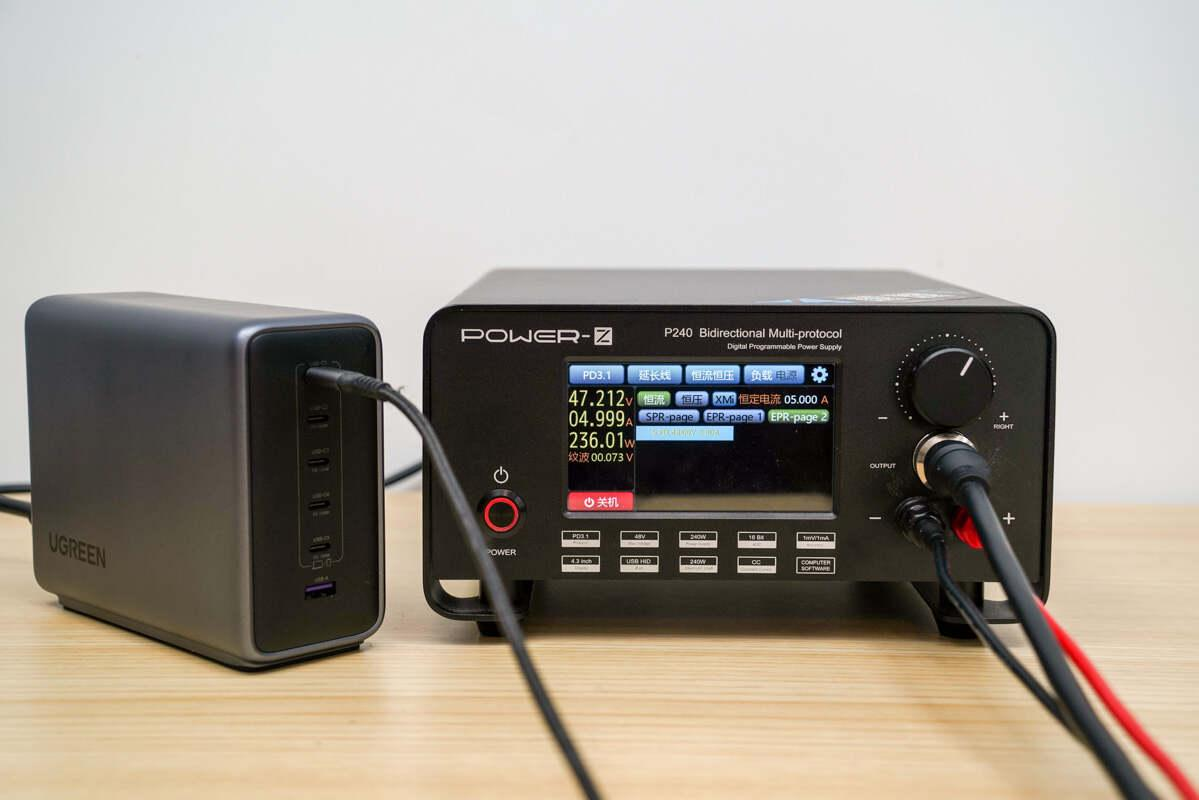 |
| Technical charging demonstrations help Amazon customers evaluate power distribution, device compatibility, thermal performance, and product reliability before purchasing. |
One of the most interesting aspects of this Chinese brand is its high-power travel adapter positioning.
The flagship configuration discussed in this case includes:
- Up to 205W total charging output.
- Up to 140W from a single supported USB-C port.
- Six USB-C ports.
- One USB-A port.
- A universal AC outlet.
Compare this with a basic travel adapter selling for $15–$25.
At first glance, both products appear to perform the same job: connecting electronic devices to different power outlets.
But the purchasing motivations are very different.
A budget buyer may simply want an adapter for a smartphone.
A premium buyer may want one device capable of supporting a laptop, tablet, phone, camera, and other accessories during international travel.
The difference is not just wattage. It is convenience, power capacity, engineering, and confidence.
What American Amazon sellers should learn
When I evaluate a potential private-label product, I do not look only at its factory price or the number of competitors.
I want to know whether there is a meaningful reason for customers to choose a more expensive version.
For example, a product listing should explain:
- What does 205W total output actually mean?
- How much power can each USB-C port deliver?
- Can multiple laptops and smartphones charge simultaneously?
- What charging protocols are supported?
- How does the product manage heat?
- What safety protections are included?
- Which international plug configurations are supported?
One important technical point: 205W total output does not mean every port can deliver its maximum rated power simultaneously. Sellers should explain the actual power-distribution table and supported charging conditions.
This is exactly where good product education can separate a premium brand from another generic Amazon listing.
My takeaway: If your product costs more than competing products, you must give customers a clear reason to pay more. A higher factory cost is not a competitive advantage by itself.
3. The Real Secret Is Customer Psychology, Not Just the Product
Why does the reported customer profile show such a strong concentration of male buyers?
There is no single explanation, and the available case data does not establish a direct cause. However, the nature of the product provides some useful clues.
Travel adapters and multi-port charging stations are functional electronics. Buyers often compare technical specifications before making a decision.
Consider two different marketing messages.
Traditional lifestyle marketing:
"Travel smarter. Stay connected wherever life takes you."
Technical, purchase-oriented marketing:
"Charge your laptop, tablet, smartphone, and accessories through one high-power charging station. Understand the 205W total output, port allocation, and built-in safety protection before you buy."
Both approaches have value, but the second may be more effective for a customer who wants technical evidence before spending $128.
Product information that reduces purchasing uncertainty
- Real-world charging tests.
- Internal product teardown videos.
- Temperature testing under different loads.
- Fuse replacement demonstrations.
- Laptop compatibility comparisons.
- Long-term durability reviews.
- Clear technical documentation.
For U.S. Amazon sellers, this suggests an important listing strategy: do not simply describe what your product has. Demonstrate why those features matter to the customer.
4. Why YouTube Can Be More Valuable Than Another Influencer Campaign
Many Amazon sellers spend money on influencers because they believe social media exposure automatically creates sales.
But technical products often require a different approach.
Imagine an American customer searching YouTube for:
- Best 200W travel adapter for MacBook Pro.
- 140W USB-C travel charger test.
- GaN travel adapter temperature test.
- Multi-port charger long-term review.
- Is a premium travel adapter worth buying?
These searches indicate something important: the customer is already researching a possible purchase.
Instead of spending the entire marketing budget on lifestyle influencers, an Amazon brand could develop three types of YouTube content.
Type 1: Technical verification
Show actual charging performance, power distribution, temperature behavior, and device compatibility.
Type 2: Real-world travel scenarios
Demonstrate how one adapter handles a laptop, tablet, phone, and camera during an international trip.
Type 3: Long-term product comparisons
Compare older and newer models after months of use. Discuss durability, limitations, compatibility, and improvements.
For an American Amazon seller, this content can serve several purposes:
- Build product credibility.
- Answer common pre-purchase questions.
- Support external traffic acquisition.
- Improve brand recognition.
- Give customers additional reasons to trust the product.
My takeaway: For technical products, a convincing demonstration may be more valuable than a video that simply makes the product look attractive.
5. The Amazon Seller's Real Challenge: Finding a Product That Is Not Another Commodity
From an American importer’s perspective, the biggest problem is not finding a Chinese factory.
There are thousands of factories offering chargers, travel accessories, home electronics, and consumer products.
The difficult part is finding a product that can generate sustainable profit after all the costs are included.
Let's consider a simplified example.
Illustrative Amazon unit economics
| Cost item | Example cost |
|---|---|
| Amazon selling price | $128.00 |
| Product manufacturing cost | $32.00 |
| China-to-USA freight and import costs | $8.00 |
| Amazon referral fee (illustrative 15%) | $19.20 |
| FBA fulfillment fee (illustrative) | $5.50 |
| Advertising cost per sale | $20.00 |
| Other operating and return allowance | $5.00 |
| Illustrative contribution | $38.30 |
Note: These are hypothetical planning figures, not the actual financial results of the brand discussed above. Actual Amazon fees depend on category, product dimensions, weight, fulfillment program, and other applicable charges. Import costs depend on product classification, customs duties, and shipping arrangements.
What does this example tell us?
A product selling for $128 does not mean the seller earns $128.
The seller must account for manufacturing, international shipping, customs duties, Amazon fees, advertising, returns, and other operating expenses.
This is why a differentiated product can be more attractive than a cheaper product with intense price competition.
However, a premium price only works if customers genuinely recognize the additional value.
6. A Practical Five-Step Strategy for U.S. Amazon Sellers
Here is how I would apply the lessons from this case when evaluating a new product sourced from China.
Step 1: Identify an Underserved Customer Segment
Before contacting suppliers, investigate who is actually purchasing the product.
Useful research sources include:
- Amazon Best Sellers and category rankings.
- Amazon customer reviews and Q&A sections.
- Amazon Brand Analytics, where eligible.
- Search Query Performance and advertising reports, where available.
- Google Trends.
- YouTube product reviews.
- Reddit product discussions.
- Competitor websites and technical FAQs.
Pay special attention to negative reviews.
Repeated complaints often reveal opportunities that competitors have not addressed.
For example, if customers repeatedly complain that existing travel adapters cannot charge a laptop and smartphone simultaneously, that could indicate demand for improved power distribution.
Step 2: Turn Customer Complaints into Product Improvements
Do not simply ask a Chinese factory to produce another version of an existing product.
Build a product improvement table first.
| Customer complaint | Potential product improvement |
|---|---|
| Insufficient charging power | Higher supported USB-C output |
| Too many chargers to carry | Multi-port charging design |
| Unclear power distribution | Transparent port allocation |
| Overheating concerns | Better thermal engineering and testing |
| Uncertain product safety | Verifiable testing and certification |
| Confusing compatibility | Clearer device and destination guidance |
The goal is to develop a product that solves a specific problem, not simply one that looks different.
Step 3: Build a Technical Content Strategy
Do not depend entirely on Amazon Sponsored Products.
Develop useful content around the questions customers search for before purchasing.
Potential SEO article topics:
- Best High-Wattage Travel Adapters for International Travelers.
- 140W vs. 100W USB-C Charging: What Laptop Users Need to Know.
- How to Choose a Multi-Port Travel Adapter.
- What Does 205W Total Output Actually Mean?
- How to Check Whether a Travel Adapter Is Safe to Use.
Potential YouTube topics:
- Testing a 205W Travel Adapter with Multiple Devices.
- Can One Travel Adapter Replace Five Chargers?
- What Happens When You Charge a Laptop and Phone Simultaneously?
- Travel Adapter Temperature Test: What Buyers Should Know.
Every article and video should answer a specific customer question and support the overall product positioning.
Step 4: Calculate Your Real Landed Cost Before Ordering
This is one of the most important lessons for U.S. importers.
A factory quotation of $5 per unit does not mean your product costs $5 when it reaches the United States.
Your actual landed cost may include:
- Product manufacturing.
- Packaging and labeling.
- China domestic transportation.
- Export handling.
- International ocean or air freight.
- U.S. customs duties and applicable tariffs.
- Customs brokerage and other entry fees.
- Final delivery to your warehouse or Amazon FBA center.
Before placing a large purchase order, request an itemized landed-cost estimate. Confirm the correct HTS classification, applicable duty treatment, importer-of-record arrangements, and any product-specific compliance requirements with qualified professionals.
Do not rely on an informal freight quotation that simply says "shipping included."
Step 5: Build an Inventory Replenishment Plan
One of the most expensive mistakes an Amazon seller can make is running out of inventory after successfully launching a product.
Stockouts can interrupt sales momentum, advertising campaigns, and organic ranking performance.
For this reason, I would build a replenishment plan around:
- Average daily sales.
- Available FBA inventory.
- Reserved and inbound inventory.
- Manufacturing lead time.
- International transit time.
- Customs clearance and delivery buffers.
- Seasonal demand fluctuations.
Air freight may make sense for urgent replenishment or smaller initial orders. Ocean freight may be more economical for larger, planned inventory movements.
The best decision depends on inventory urgency, product margin, cargo volume, and the cost of running out of stock.
7. China-to-USA Logistics: The Hidden Factor Behind Amazon Profitability
As an American Amazon seller sourcing products from China, I would never evaluate a freight forwarder solely by its quoted price per kilogram or cubic meter.
The real question is whether the logistics arrangement supports my business model.
A shipment has to move through several stages:
Chinese Factory → Export Preparation → China Customs → International Freight → U.S. Customs → Final Delivery → Amazon FBA Warehouse
Problems at any stage can affect inventory availability and cash flow.
For example:
- Incorrect carton labels may cause Amazon receiving problems.
- Incomplete shipping documentation may delay customs clearance.
- Unexpected destination charges may reduce product margins.
- Unreliable sailing schedules may disrupt inventory planning.
- Late FBA delivery may create a stockout during an advertising campaign.
DDP vs. DAP: Which shipping arrangement makes sense?
American importers should understand the difference between these shipping terms before booking cargo.
| Shipping term | Who handles U.S. import clearance and duties? | Typical consideration |
|---|---|---|
| DDP | Seller or contracted party under the agreed arrangement | Convenient when the importer wants an all-inclusive arrangement, subject to a compliant IOR structure |
| DAP | Buyer | Useful when the importer has its own customs broker and import arrangements |
| DDU | Traditionally the buyer | Legacy Incoterm replaced by DAP in Incoterms 2010; clarify the actual contractual responsibilities |
DDP is not automatically the cheapest option, and DAP is not automatically more complicated. The right choice depends on your importing structure, customs arrangements, product classification, and total landed cost.
For a more detailed explanation, see STU Supply Chain's guide:
Sea Freight from China to USA: DDP vs. DDU vs. DAP Costs and Amazon FBA Shipping Guide
The guide explains shipping arrangements, customs responsibilities, sea freight options, and Amazon FBA delivery considerations for importers moving cargo from China to the United States.
What should an Amazon FBA freight forwarder provide?
Before choosing a logistics partner, I would check the following:
- China export experience: Can the provider collect cargo from different Chinese suppliers and coordinate export preparation?
- Amazon FBA familiarity: Can it verify FNSKU carton labels and applicable pallet requirements?
- Delivery coordination: Can it arrange delivery appointments where required?
- Customs support: Are import clearance responsibilities and the importer of record clearly identified?
- Cost transparency: Are freight, duties, customs clearance, and final delivery separately explained?
- Shipment visibility: Can the seller monitor progress and receive updates when problems occur?
STU Supply Chain provides China-origin ocean freight, air freight, and Amazon FBA shipping solutions for U.S. importers and sellers.
For sellers comparing shipping options, the important thing is to request a quotation based on the actual product, HS code, cargo weight, volume, destination, and delivery requirements rather than relying on a generic rate.
My takeaway: A dependable freight arrangement is part of the Amazon business strategy. Saving a small amount on shipping is not worth risking an expensive inventory shortage or unexpected destination costs.
8. The Bigger Opportunity: Stop Trying to Sell to Everyone
The biggest lesson from this Chinese travel adapter case is not that every Amazon seller should target men over 55.
That would simply create another crowded market.
The real lesson is to stop assuming that the most visible customer segment is always the most profitable one.
Many sellers compete for:
- Younger consumers.
- Trend-conscious shoppers.
- Social media audiences.
- Price-sensitive buyers.
But a sustainable Amazon business does not need to appeal to everyone.
It needs to solve a meaningful problem for a sufficiently large group of customers who are willing to pay for that solution.
From a U.S. importer’s perspective, I would rather find a product with a clearly defined customer, a defensible value proposition, and healthy unit economics than enter another price war with dozens of nearly identical listings.
That requires looking beyond the factory quotation and thinking about the entire business:
- Who is the end customer?
- What problem are we solving?
- Why would customers pay more?
- How much does customer acquisition cost?
- What is the true landed cost?
- Can inventory be replenished reliably?
The next successful Amazon private-label brand may not come from finding another viral product.
It may come from discovering a customer group that competitors have stopped paying attention to.
For American Amazon sellers and importers sourcing from China, that is an opportunity worth investigating.
Frequently Asked Questions About Amazon Product Strategy and China Sourcing
1. Why should Amazon sellers consider customers aged 55 and above?
Some consumers aged 55+ have substantial purchasing power, established product preferences, and specific requirements for reliability and usability. Sellers should validate actual demand using Amazon customer data, reviews, and conversion reports rather than relying on demographic assumptions.
2. Are older American consumers willing to pay more for premium electronics?
Some are willing to pay more when a product offers clear benefits such as better performance, safety, reliability, convenience, and customer support. Premium pricing must be supported by real product advantages.
3. How can American Amazon sellers find profitable products from China?
Start with customer research, identify recurring complaints in competitor reviews, evaluate product differentiation, obtain factory quotations, calculate landed costs, and test demand before committing to large inventory orders.
4. Is YouTube effective for Amazon product marketing?
YouTube can support product discovery and purchase confidence, especially for technical products. Demonstrations, independent reviews, compatibility tests, and long-term comparisons can help customers evaluate a product before purchasing.
5. What is the difference between DDP and DAP shipping from China to the USA?
Under DDP, the seller has the contractual responsibility to arrange delivery with import clearance and applicable duties paid. Under DAP, delivery is arranged to the named destination, but the buyer generally handles import clearance and duties. The exact importer-of-record and customs arrangements should always be confirmed in writing.
6. Can a freight forwarder ship directly from China to Amazon FBA warehouses?
Yes. Suitable logistics providers can coordinate China pickup, export customs, international freight, U.S. import clearance, carton labeling checks, pallet preparation, and delivery appointments, subject to Amazon's applicable inbound requirements.
7. Should Amazon sellers choose air freight or ocean freight?
Air freight is generally more suitable for urgent replenishment and smaller shipments where speed justifies the higher cost. Ocean freight is often more economical for larger, planned shipments. Sellers should compare total landed cost and inventory requirements before deciding.
8. What is the biggest lesson from the Chinese travel adapter case?
The biggest lesson is that customer segmentation, product differentiation, technical marketing, and reliable supply-chain execution should work together. Finding an underserved customer segment can create an advantage that competing on price alone cannot easily reproduce.
About STU Supply Chain
STU Supply Chain provides China-origin international logistics solutions for global importers, Amazon sellers, and international businesses.
Its services include:
- China to USA ocean freight.
- China to USA air freight.
- Amazon FBA shipping.
- DDP and door-to-door shipping solutions.
- Export customs coordination and shipment preparation.
For American Amazon sellers sourcing products from China, choosing the right shipping arrangement can help improve inventory planning and manage total landed logistics costs.
Explore the China-to-USA shipping guide:
https://stusupplychain.com/sea-freight-from-china-to-usa-ddu-ddp-dap.html
Website: www.stusupplychain.com
Email: sales@stusupplychain.com
Editorial disclosure: This article presents a U.S. Amazon seller and importer perspective for educational and business analysis purposes. The customer profile and brand observations are case-study information, not independently audited marketplace statistics. STU Supply Chain is referenced as a China-origin logistics service provider; this article is not an independent customer testimonial or endorsement of a particular travel adapter brand.


Comments
Post a Comment