Amazon FBA Inventory Planning: How Much Stock Should U.S. Sellers Ship from China Before Running Out?
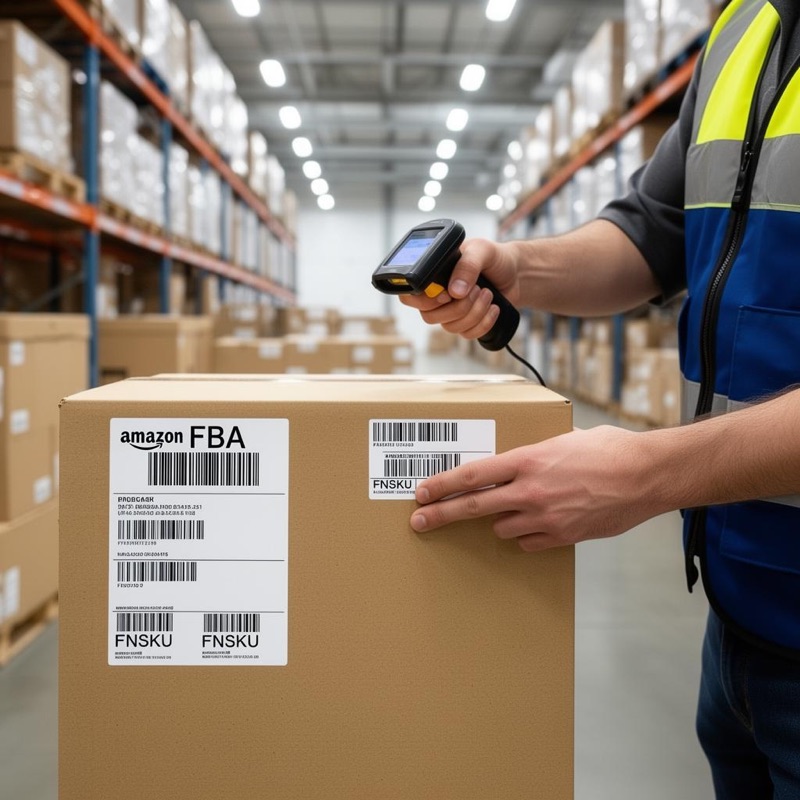 |
| Running out of FBA inventory can interrupt sales when replacement stock from China has not yet arrived. |
Your Amazon listing is performing well. Orders are coming in every day. But there is one problem: your next shipment from China is still on the water, and your FBA inventory is getting dangerously low.
For U.S. Amazon sellers importing from China, this is one of the most expensive inventory mistakes to make. Running out of stock can interrupt sales momentum, reduce listing visibility, and force sellers to spend significantly more on emergency air freight.
On the other hand, sending too much inventory to Amazon can tie up working capital, increase storage expenses, and create problems when demand slows down.
So, how much stock should you actually ship from China before running out?
The answer is not simply 30 days, 60 days, or 90 days of inventory. It depends on your daily sales velocity, production time, transportation lead time, Amazon receiving time, demand fluctuations, and available FBA capacity.
This guide explains how U.S. Amazon sellers can calculate their reorder points, safety stock, and shipment quantities using a practical inventory planning method.
1. The Biggest Mistake: Reordering When Amazon Inventory Looks Low
Many new Amazon sellers use a simple approach: when their FBA inventory starts looking low, they contact their Chinese supplier and place another order.
Unfortunately, this approach often fails when products are shipped internationally.
Consider a typical situation:
- Your product sells 20 units per day.
- You have 800 sellable units remaining at Amazon.
- Your supplier needs 15 days to manufacture the next batch.
- International transportation and delivery to the FBA network take several more weeks.
- Amazon still needs time to receive and process the shipment.
By the time your new inventory becomes available for sale, your existing stock may already be gone.
The key lesson is simple: you should reorder based on the time required to replenish inventory, not just the number of units currently displayed in Seller Central.
2. Calculate Your Total Replenishment Lead Time
 |
| A complete replenishment plan should include production, origin handling, international transportation, customs clearance, and Amazon receiving. |
Before deciding how much inventory to ship, calculate the complete replenishment cycle from your Chinese supplier to sellable Amazon FBA inventory.
There are usually five stages to consider:
| Stage | Example Planning Time |
|---|---|
| Production and supplier preparation | 15 days |
| Export preparation and origin handling | 5 days |
| International transportation and U.S. delivery arrangements | 35 days |
| Amazon appointment, receiving and processing | 7 days |
| Total replenishment lead time | 62 days |
Important: These are illustrative planning assumptions, not guaranteed transit times or service commitments. Actual lead times depend on the shipping method, origin, destination, customs clearance, carrier schedules, peak-season congestion, and Amazon receiving conditions.
One mistake sellers often make is counting only the ocean transit time. But your inventory is not available for customer orders simply because the vessel has arrived in the United States.
You still need to account for customs clearance, destination handling, delivery appointments, and Amazon's receiving process.
For this reason, experienced importers plan around the complete door-to-FBA replenishment cycle rather than relying on a single transportation estimate.
3. Use the Reorder Point Formula
Once you know your replenishment lead time, you can calculate the inventory level at which a new purchase order should be triggered.
Reorder Point Formula
Reorder Point = Daily Sales × Total Lead Time + Safety Stock
Let's use a practical example.
- Average daily sales: 20 units
- Total replenishment lead time: 62 days
- Safety stock: 300 units
Your calculation would be:
20 × 62 + 300 = 1,540 units
This means you should trigger replenishment when your inventory position falls to approximately 1,540 units.
Notice that this does not mean you must have 1,540 units physically sitting inside an Amazon fulfillment center. You need to look at your complete inventory position, including relevant inbound shipments and open purchase orders.
For a practical inventory review, separate your stock into these categories:
- Available FBA inventory: Units currently sellable to customers.
- Inbound inventory: Units shipped to Amazon but not yet fully received or made available for sale.
- Supplier inventory: Finished goods or confirmed production that can realistically be released on schedule.
- Committed inventory: Units already allocated to other sales channels or customer orders.
Do not count unconfirmed production or an uncertain shipment as guaranteed available inventory. Keep your inventory records consistent so you do not accidentally double-count stock.
 |
| Sales velocity, replenishment lead time, and safety stock help sellers determine when and how much inventory to reorder. |
4. How Much Safety Stock Should You Keep?
Safety stock protects your business when actual demand or replenishment time is different from your original forecast.
For example, your product may normally sell 20 units per day. But sales could increase during a promotion, while a shipment may take longer than expected because of customs delays or port congestion.
Without a buffer, even a small delay can cause a stockout.
There is no universal safety-stock number that works for every Amazon product. A useful starting point is to estimate how many extra days of demand you want to protect.
Simple Safety Stock Formula:
Safety Stock = Average Daily Sales × Buffer Days
For example:
- Average daily sales: 20 units
- Chosen buffer: 15 days
- Safety stock: 20 × 15 = 300 units
Fifteen days is only an example. A product with unstable demand, long production cycles, or frequent shipping delays may require a larger buffer. A product with predictable sales and reliable replenishment may need less.
For more advanced planning, sellers can calculate safety stock using demand variability and lead-time variability. However, the simple buffer-days method is often easier to implement when starting an inventory planning system.
5. Reorder Point Is Not the Same as Order Quantity
This is where many sellers make another mistake.
The reorder point tells you when to replenish. It does not automatically tell you how many units to order.
Your order quantity should consider:
- Expected sales during the next replenishment cycle.
- How many days of inventory you want to hold after the next shipment arrives.
- Existing inventory and confirmed inbound shipments.
- Supplier minimum order quantities (MOQ).
- Available working capital.
- Amazon FBA storage and capacity restrictions.
A useful planning approach is to set a target inventory position that covers both the next replenishment lead time and your desired stock coverage after arrival.
Order-Up-To Formula
Target Inventory Position = Daily Sales × (Lead Time + Target Coverage Days) + Safety Stock
Suggested Order Quantity = Target Inventory Position − Current Inventory Position
Using our previous example:
- Daily sales: 20 units
- Lead time: 62 days
- Desired inventory coverage after replenishment: 60 days
- Safety stock: 300 units
- Current inventory position: 1,540 units
First, calculate the target inventory position:
20 × (62 + 60) + 300 = 2,740 units
Then calculate the suggested order quantity:
2,740 − 1,540 = 1,200 units
Under these assumptions, the seller would plan to replenish approximately 1,200 units.
This is a planning example, not an automatic purchase recommendation. Before placing the order, adjust for demand forecasts, existing purchase orders, supplier constraints, available cash, and Amazon's current capacity limits.
6. Ocean Freight or Air Freight? Build a Two-Speed Replenishment Strategy
For many U.S. Amazon sellers sourcing products from China, ocean freight is the more economical option for planned replenishment. However, ocean freight may not be suitable when inventory is already close to running out.
Instead of relying on only one shipping method, consider a two-speed replenishment strategy.
| Shipping Method | Best Use | Planning Approach |
|---|---|---|
| Ocean Freight | Regular replenishment and larger shipments | Plan ahead using forecast demand and full lead time |
| Air Freight | Urgent replenishment and limited stock recovery | Ship a smaller quantity to reduce the risk of a stockout |
| Express Courier | Samples, urgent small quantities, or exceptional situations | Use selectively because the unit transportation cost can be high |
For example, a seller might send most of a planned replenishment order by ocean freight while reserving a smaller quantity for faster transportation if sales suddenly increase.
The exact split should depend on the product's gross margin, selling speed, transportation cost, and the financial impact of running out of stock.
Do not automatically ship a fixed percentage by air. Calculate whether the extra transportation expense is justified by the contribution margin you expect to protect.
7. Don't Ignore Amazon FBA Capacity and Inventory Limits
Even if your inventory calculation says you need another 2,000 units, Amazon may not necessarily allow you to send that quantity immediately.
FBA sellers should check their current capacity and restock information in Seller Central before confirming a shipment.
Amazon's inventory rules distinguish between different concepts, including:
- FBA capacity limits: The available capacity for inventory in fulfillment centers.
- Restock limits: The quantity you are permitted to send, depending on the applicable storage type and account conditions.
- Inventory Performance Index (IPI): A measure of inventory management efficiency.
- Inventory age and excess inventory: Indicators that help sellers identify stock that may be sitting too long.
Another important detail: Amazon's restock-limit calculations can include inventory already at fulfillment centers and shipments in Working, In Transit, and Receiving status. Therefore, a shipment that has not yet become sellable may still affect your available replenishment capacity.
Before creating a new shipment, review the current Capacity Monitor, Restock Limits Monitor, and FBA Inventory dashboard in Seller Central.
Amazon also provides inventory planning recommendations. Its guidance discusses maintaining balanced stock levels, avoiding excess and aged inventory, and keeping popular products available. Some Amazon resources suggest approximately 4–8 weeks of inventory coverage as a general planning reference, but this should not replace your own lead-time calculation.
Useful official resources:
- Amazon FBA Capacity Limits
- Amazon Restock Limits by Storage Type
- Amazon Inventory Performance
- Amazon Minimum Inventory Level Overview
8. Seasonal Products Need a Different Inventory Strategy
Average daily sales can be misleading when demand changes throughout the year.
For example, a product may sell 10 units per day during a normal month but 40 units per day during a major promotional period.
If you use the normal monthly average to calculate replenishment, you may underestimate demand just when you need inventory most.
U.S. Amazon sellers should pay particular attention to:
- Prime Day and other major Amazon promotional events.
- Back-to-school shopping periods.
- Halloween and the holiday shopping season.
- Black Friday and Cyber Monday.
- Christmas and year-end gifting demand.
For seasonal products, use a forward-looking sales forecast rather than relying only on the previous 30 days.
Ask yourself three questions:
- How much inventory do I expect to sell during the promotional period?
- When is the latest date my replenishment shipment can arrive and become sellable?
- What happens if demand is 20%–30% higher than expected?
It is also important to confirm production capacity and shipping arrangements before a peak season begins. Waiting until every seller is trying to ship inventory at the same time can reduce your flexibility.
9. A Practical Weekly Inventory Planning Routine
You do not need a complicated enterprise inventory system to improve your replenishment decisions. A consistent weekly review can already make a major difference.
Here is a simple routine for U.S. Amazon sellers:
| Frequency | What to Review |
|---|---|
| Daily | Sales velocity, available FBA inventory, and unexpected demand changes |
| Weekly | Reorder points, inventory coverage, open purchase orders, and inbound shipment status |
| Every two weeks | Supplier production progress, shipping schedules, and estimated arrival dates |
| Monthly | Forecast accuracy, aged inventory, cash flow, and product profitability |
For each important SKU, maintain a simple inventory worksheet with these fields:
- Average daily sales
- Current sellable FBA inventory
- Confirmed inbound quantity
- Supplier production lead time
- Estimated transportation and receiving lead time
- Safety stock
- Reorder point
- Next purchase order date
- Planned shipping method
Review the numbers regularly. A product that sells 10 units per day today may sell 25 units per day next month. Your replenishment plan should change when demand changes.
10. The Hidden Cost of Poor Inventory Planning: Emergency Freight
Many sellers compare transportation methods by looking only at the cost per kilogram or the total freight bill.
But the real cost of poor inventory planning can be much higher.
Imagine a product that generates $15 in contribution margin per unit before the cost of an emergency replenishment decision. If a stockout prevents 500 potential sales, the potential lost contribution margin would be:
500 × $15 = $7,500
This is a simplified illustration, not a forecast of actual lost sales. Real results depend on customer demand, competition, listing performance, advertising, and whether customers purchase alternative products.
Now compare that potential loss with the additional cost of sending a small urgent shipment by air.
In some situations, faster transportation may be commercially reasonable. In others, it may cost more than the margin it protects.
The important point is to make this decision before your inventory reaches a critical level, not after the product is already out of stock.
11. What U.S. Sellers Should Check When Shipping FBA Inventory from China
Inventory planning and international shipping planning should work together.
Before releasing a shipment from China, make sure you have considered the following:
- Supplier readiness: Are the products finished, inspected, labeled, and packed according to the agreed requirements?
- Amazon shipment requirements: Are the shipment plan, carton labels, product labels, and packaging requirements correct?
- Customs documentation: Are the commercial invoice, packing list, product descriptions, and other required documents accurate?
- Importer responsibilities: Is the importer of record and customs clearance arrangement clearly established?
- Delivery planning: Is the destination fulfillment center known, and have delivery and appointment requirements been considered?
- Cost calculation: Have you calculated the total landed cost rather than looking at freight charges alone?
For a closer look at the transportation and delivery options available to U.S. importers, see our guide:
Sea Freight from China to the USA: DDP, DAP and Delivery Options Explained
The right shipping arrangement should fit your inventory schedule, product type, customs requirements, and cost structure. Make sure the responsibilities for duties, taxes, customs clearance, and final delivery are agreed upon before the shipment moves.
12. Final Checklist: Are You Reordering Early Enough?
Before placing your next purchase order in China, ask yourself these questions:
- Do I know the actual daily sales velocity of each important SKU?
- Have I calculated production, origin handling, transportation, customs, and Amazon receiving time?
- Have I included a realistic safety stock buffer?
- Am I counting inbound inventory correctly without double-counting?
- Have I checked Amazon's current FBA capacity and restock limits?
- Have I calculated the order quantity separately from the reorder point?
- Do I have a backup transportation plan if demand suddenly increases?
- Can my business afford the inventory investment without creating a cash-flow problem?
If you cannot answer these questions confidently, your replenishment process probably relies too much on guesswork.
Frequently Asked Questions
How many days of inventory should Amazon FBA sellers keep?
There is no single number that works for every seller. A general inventory coverage target may be 30–60 days for some products, but sellers importing from China must also account for production and transportation lead times. Use your own sales velocity and replenishment cycle to determine the right level.
When should I reorder products from China for Amazon FBA?
Reorder when your inventory position reaches the reorder point. Calculate it by multiplying average daily sales by total replenishment lead time, then adding safety stock.
Is ocean freight suitable for Amazon FBA replenishment?
Ocean freight can be suitable for planned, larger replenishment shipments when sufficient time is available. Sellers facing urgent stock shortages may consider air freight or another faster option for a smaller quantity.
Should I send all my inventory to Amazon FBA at once?
Not necessarily. Sending inventory in planned batches can help control storage costs, reduce the risk of overstocking, and preserve working capital. However, your replenishment schedule must account for transportation lead time and Amazon's current capacity restrictions.
Does Amazon count inbound shipments toward restock limits?
Amazon's restock-limit guidance states that utilization can include inventory at fulfillment centers and shipments in Working, In Transit, and Receiving status. Check the current Restock Limits Monitor in Seller Central before creating additional shipments.
Conclusion: Stop Guessing. Start Planning Your FBA Inventory.
For U.S. Amazon sellers importing from China, inventory planning is not simply about deciding how many cartons to ship. It is about coordinating sales forecasts, supplier production, international transportation, customs clearance, Amazon receiving, and cash flow.
The most important principle is to start replenishment early enough that your next shipment can become sellable before your current inventory runs out.
Calculate your reorder point. Maintain an appropriate safety stock buffer. Separate your reorder point from your order quantity. And review your Amazon capacity before confirming each shipment.
A well-planned replenishment system helps protect sales, reduce emergency freight expenses, and keep your Amazon business growing without tying up unnecessary cash in inventory.
About STU Supply Chain
STU Supply Chain supports international shipping and logistics arrangements for businesses importing goods from China to the United States. We help importers and e-commerce sellers evaluate transportation options and coordinate their shipping plans around business requirements.
Learn more about shipping from China to the USA:
China to USA Sea Freight – DDP, DAP and Delivery Solutions
Editorial note: The inventory calculations in this article are illustrative planning examples, not Amazon requirements or guarantees of shipping and receiving times. Sellers should confirm current account-specific FBA limits, shipment requirements, and inventory recommendations in Seller Central.


Comments
Post a Comment