A 369-Metre Ship Just Ended a Three-Year Detour — And Your China-to-Europe Freight Quote Hasn't Noticed Yet
Published November 2026 | 11 min read | Asia–Europe ocean freight, Suez Canal return, capacity & rate analysis
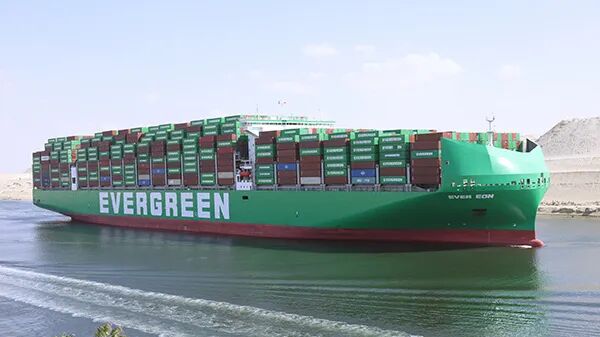
The short version: Evergreen's Ever Eon (16,556 TEU) transited the Suez Canal eastbound on 7 November 2026 — the first Evergreen ship to do so in nearly three years. Evergreen was the last Ocean Alliance holdout. Roughly 60% of Asia–Europe capacity is already back on the Suez routing (Drewry), and a full industry return is expected by Q1 2027 (Linerlytica).
The catch: shorter loops release 6–8% of global container capacity, which pushes rates down — but bunched arrivals at European ports can push your landed date out. Cheaper freight and later delivery can happen in the same quarter. Before your next PO, re-check the routing on your quote, not just the price.
A 369-metre container ship slipped through the Suez Canal on 7 November 2026, sailing east from the Netherlands toward Singapore. No press conference. No fireworks. Just the Ever Eon — 16,556 TEU, 53.6 metres wide — quietly doing something no Evergreen vessel had done since late 2023.
That is a strange way for a three-year, billion-dollar detour to end. And the strange details are the ones that actually matter to anyone booking a container out of Shenzhen, Ningbo or Qingdao.
Four details almost nobody reported
1. The comeback ship was going the “wrong” way. The Ever Eon was eastbound, Netherlands to Singapore, on the Ocean Alliance's NEU7/CES loop. The return was not announced with a shiny new Asia–Europe launch — it happened on a repositioning leg.
2. The return literally deletes ships. The Premier Alliance's revised MD1 Asia–Mediterranean loop will turn in 84 days with 12 ships instead of the 16 needed on the Cape of Good Hope routing. A shorter road needs fewer vehicles. Those four vessels do not vanish — they reappear as spare capacity on somebody else's rate sheet.
3. One big carrier is still saying no. ZIM remains the most prominent mainline operator staying on the Cape route, while Maersk describes its own Gemini return as phased, service by service. “Everyone is back” is not yet a booking-level fact.
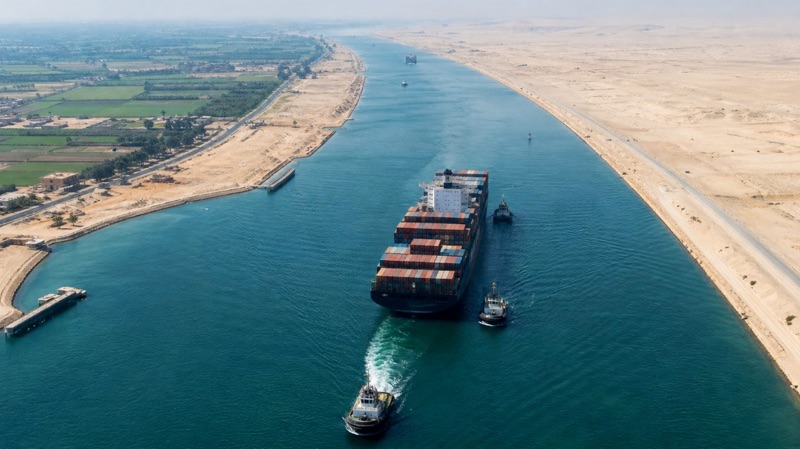
4. The canal just had its best month since the crisis began. The Suez Canal Authority reported 1,490 transits in October 2026, 88 million net tonnes and $724m in revenue — up 32%, 86% and 94% respectively against October 2025.
The timeline, verified
Chinese trade press circulated slightly different dates for these sailings. The figures below follow the industry-standard schedule published by Linerlytica and reported by The Loadstar on 3 November 2026, which is what carriers and NVOCCs actually work from.
| Vessel | Capacity | Service | Suez transit |
|---|---|---|---|
| Ever Eon | 16,556 TEU | NEU7/CES (Far East–N. Europe) | 7 Nov 2026 |
| Ever Edit | 16,556 TEU | NEU7/CES | 11 Nov 2026 |
| Ever Gifted | 20,124 TEU | MD2 (Asia–Mediterranean) | 16 Nov 2026 |
| YM Trust | 11,714 TEU | MD1, adds Sokhna call | From 13 Nov, Dec crossings |
| Ever Superb | 7,024 TEU | OGRD (China–Red Sea relaunch) | 12 Nov, ex-Qingdao |
CMA CGM, COSCO and OOCL had already restored canal transits; Evergreen was the final Ocean Alliance member holding out. Linerlytica expects all three major alliances and MSC to have their Suez networks back by Q1 2027. The OGRD Red Sea loop is a curiosity in its own right: a 56-day rotation with just four 7,000–9,000 TEU ships, running fortnightly, calling Qingdao → Shanghai → Ningbo → Shekou → Singapore → Jeddah → Sokhna → Aqaba → Jeddah → Port Klang → Qingdao. Jeddah twice, on purpose.
The numbers behind the headline
| Indicator | Latest reading | Source / date |
|---|---|---|
| Asia–Europe capacity back via Suez | ~60% | Drewry, Nov 2026 |
| Two-way container transits, week to 1 Nov | 53 sailings | Drewry / canal data |
| Suez October transits / revenue | 1,490 / $724m | SCA, Oct 2026 |
| Drewry World Container Index | $4,389 / FEU (−1%) | 5 Nov 2026 |
| Shanghai → Rotterdam | $3,615 / FEU (−2%) | 5 Nov 2026 |
| Shanghai → Genoa | $4,166 / FEU (flat) | 5 Nov 2026 |
| Capacity released by a full return | 6–8% of global fleet | Xeneta estimate |
Read those two blocks together and the story stops being “a ship came back”. The 1 November general rate increase did not gain traction. Mid-November increases were already being doubted by analysts. Drewry's own reasoning is blunt: faster rotations create space with the ships already in service, so supply grows without a single new vessel being delivered. That is structural downward pressure on Asia–Europe rates at exactly the moment a wave of newbuildings is entering the market.
The paradox: the shortest route can make your cargo late
Here is the part that does not fit in a headline. A ship that used to take 42–46 days from Shanghai to Rotterdam via the Cape now takes roughly 30–32 via Suez. Everyone assumes that means an earlier delivery. Often it does not.
European gateways — Rotterdam, Antwerp, Hamburg, Felixstowe, Valencia, Piraeus — have spent three years building berth windows, drayage capacity, customs broker workloads and Amazon FBA appointment rhythms around a 45-day arrival cadence. Compress the loop by two weeks and vessels start arriving in bunches, earlier than the warehouse slot that was booked for them. Drewry has explicitly warned that a fast switch back to Suez raises congestion risk at European ports.
An illustrative scenario, not a quote: a 40HQ ex-Ningbo planned on a 42–46 day Cape sailing is rolled onto a returning Suez loop and lands 10–14 days early, into a distribution centre with no receiving appointment. Storage and demurrage quietly eat the freight saving. The invoice improves; the delivery date does not.
There is a second, less obvious effect. Running a weekly service with 12 ships instead of 16 leaves less recovery buffer. On the Cape rotation, a vessel falling three days behind could be absorbed by the loop. On a tight 84-day Suez rotation, the same slip propagates straight into the next departure. Shorter routes are more efficient and, paradoxically, more brittle.
So the honest planning statement for Q4 2026 / Q1 2027 is: port-to-port transit is improving, door-to-door reliability is temporarily less predictable.
Six things to do before your next booking
- Re-quote; do not assume the old number holds. With the 1 November GRI failing and further declines expected, ask for a fresh spot rate with an explicit validity date and a written list of what is included (THC, documentation, origin and destination charges).
- Ask for the service code, not “China to Europe”. NEU7/CES, MD2, MD1 and ME1 are different routings with different transit times. Get the vessel name and rotation written into the booking confirmation, then check whether it is a Suez or Cape sailing.
- Separate transit time from landed date. Request cut-off, ETA, berth window, clearance SLA and final-mile appointment as five separate numbers. A quote that says only “30 days” is not a delivery commitment.
- Keep a Cape-route fallback. The return is phased and service by service; ZIM is still on the Cape route. If your cargo is on a loop that has not switched, the 42–46 day plan still applies.
- Re-run the DDP maths. HS code duty, import VAT, EORI, ICS2 entry summary declarations and the 2026 EU rules on low-value parcels do not change because the ship took a shortcut. A cheaper ocean leg can mask an unchanged tax and compliance bill. Confirm current thresholds with your customs broker.
- Split FBA replenishment. Move the bulk by sea or rail, keep a small air top-up for the launch SKU. Early arrival solves a stockout but creates an appointment-slot problem; a split shipment converts one big risk into two small ones.
Mode maths, 2026 planning ranges
| Mode | Typical transit | Indicative cost | Best for |
|---|---|---|---|
| Sea FCL via Suez | 30–32 days port-to-port | Benchmark: Shanghai–Rotterdam $3,615/FEU (5 Nov) | >15 CBM, bulk stock |
| Sea FCL via Cape | 42–46 days port-to-port | Rate-driven; verify per loop | Loops not yet returned |
| Sea LCL | FCL + 3–7 days | Charged per CBM, min 1 CBM | 2–13 CBM, multi-SKU |
| China–Europe rail | 12–25 days terminal-to-terminal | ~40% below air, above sea | Electronics, auto parts, seasonal |
| Air freight | 3–7 days | Roughly $5–8.5/kg indicative | Launch stock, urgent top-up |
| DDP door-to-door | Above + 5–12 days for clearance & final mile | All-in; duty, VAT, delivery included | FBA, B2C, first-time importers |
Planning ranges compiled from public 2026 guides and index readings, not a quotation. Transit varies by carrier, cut-off, season, congestion and destination. Confirm against a live sailing schedule.
Choosing between them is exactly where a forwarder earns their fee. If you want a single point of contact across sea, air, rail and DDP on this corridor, the China-to-Europe freight forwarding desk at STU Supply Chain covers the ports that benefit most from the Suez return: Rotterdam, Antwerp, Hamburg, Felixstowe, Valencia and Piraeus.
Service map: one link per product
Each entry has its own dedicated page, its own FAQ and its own structured data. Use them as a checklist when you compare quotes.
1. China to Europe Freight Forwarding & Suez Route Desk
FCL, LCL, breakbulk, buyer's consolidation, door-to-door and DDP from Shenzhen, Guangzhou, Shanghai, Ningbo, Xiamen, Qingdao and Tianjin into Northern, Western, Southern, Central and Eastern Europe, the Mediterranean, the Red Sea, the Black Sea and North Africa. Licensed NVOCC and FMC operator; WIFFA, WCA and JCtrans member. Carrier coverage includes MSK, MSC, COSCO, ONE, CMA, OOCL, ZIM, YANG MING and EVERGREEN — useful when you need to switch loops mid-disruption.
View the China–Europe freight forwarding service →
FAQ
Which European ports can I ship to? Rotterdam, Antwerp, Hamburg, Felixstowe, Southampton, Le Havre, Valencia, Barcelona, Genoa, Piraeus, Koper, Gdynia, Lisbon, Casablanca and more, across 20+ destination countries.
Can I ask for a specific Suez service code? Yes. Request the loop (NEU7/CES or MD2) and the vessel name on the booking confirmation, so quoted transit time matches the routing actually sailed.
2. Sea Freight — FCL & LCL Container Shipping
20GP, 40GP, 40HQ and 45HQ containers, plus reefer, open top, flat rack and open side units. General cargo, chemicals, hazardous goods, refrigerated cargo and out-of-gauge loads. This is the service most directly affected by the Suez return: the same box now has two very different transit times depending on the loop it is booked on.
View sea freight FCL / LCL services →
FAQ
FCL or LCL? Above roughly 15 CBM a full container is usually cheaper and safer because it is never deconsolidated. Below that, LCL billed per CBM suits multi-SKU replenishment.
Should I re-quote after the Suez return? Yes. Faster rotations add effective capacity; ask for a fresh rate with a validity date, and confirm whether the vessel sails via Suez or the Cape.
3. Shipping from China to Europe — Country-by-Country Routes
Route-level planning for the UK, Germany, France, Netherlands, Belgium, Spain, Italy, Poland, Czech Republic, Austria, Greece, Turkey, Scandinavia, Ireland, Portugal, Romania, Hungary and North Africa. Useful because the Suez return does not affect all destinations equally: Mediterranean gateways shorten differently from Northern European ones.
FAQ
Which gateways benefit most? Mediterranean ports such as Valencia, Genoa and Piraeus shorten the most in sailing days; Rotterdam and Hamburg gain too, but face the highest bunched-arrival congestion risk.
Do I need a different EORI for each EU country? One EORI issued by any EU member state is generally valid EU-wide, but VAT registration and fiscal representation rules vary. Confirm with your broker.
4. DDP Door-to-Door, Customs Clearance & Warehousing
Export declaration, customs clearance, warehousing and consolidation, duty and VAT handling under DDP/DDU, and final-mile delivery. This is the layer where a “cheaper” Suez sailing can quietly become more expensive: an early arrival with no clearance slot or receiving appointment creates storage, demurrage and re-delivery costs.
View DDP, customs & warehousing solutions →
FAQ
What must a DDP quote include? Pickup, export declaration, main carriage, destination clearance, HS duty, import VAT, port charges and last-mile delivery — as separate line items, because a single all-in number hides the tax assumptions.
What is ICS2 in practice? An Entry Summary Declaration is filed before EU-bound cargo is loaded, so accurate six-digit HS codes, consignee details and EORI numbers must be ready before cut-off, not after arrival.
5. Amazon FBA Shipping from China to Europe
Pickup, consolidation across multiple suppliers, labelling and carton checks, China export customs, sea or air carriage, import customs, duty payment and delivery to the nominated FBA or private address. FBA is where the “early arrival” paradox bites hardest: Amazon receiving appointments are booked against an ETA, and a vessel arriving two weeks early can miss its slot entirely.
View Amazon FBA shipping services →
FAQ
Do I need DDP for EU FBA shipments? Amazon will not accept stock with outstanding duties or taxes. DDP, with a valid EORI and VAT arrangement, is the practical default for EU fulfilment centres.
How should I re-time replenishment? Keep the bulk on sea or rail, reserve a small air top-up for the launch SKU, then re-confirm the FBA appointment window once the Suez ETA is firm.
6. Air Freight from China to Europe
Three-to-seven-day uplift for launch stock, samples and urgent replenishment. In a quarter where ocean ETAs are being rewritten loop by loop, air is less a luxury than a scheduling hedge — the cost of one pallet by air is often lower than the cost of a missed European retail window.
FAQ
When is air worth it? For high-value, low-volume, time-critical cargo, or as a 5–10% top-up alongside a sea shipment to protect a launch date.
What about batteries and electronics? Lithium and magnetic goods need additional documentation and capacity is often tighter. Declare them at quote stage, not at handover.
7. OOG & Open Side Containers
Out-of-gauge machinery, flat rack and open top solutions, and 40' high cube open side containers for cargo that cannot be loaded through standard doors. These units are scarce by definition, so a sudden routing change can leave an OOG booking stranded at a transshipment port that lacks the right handling gear.
View OOG container services → | Open side container guide →
FAQ
What counts as OOG cargo? Any cargo exceeding standard container internal dimensions or weight limits, typically moved on flat rack or open top units with lashing and securing plans.
Why does routing matter more for OOG? Special equipment and heavy-lift handling are not available at every transshipment port. Confirm the full rotation before booking, especially while loops are being rewritten.
8. Reefer Transportation
Temperature-controlled reefer containers for refrigerated and frozen cargo. A shorter Suez transit is genuinely good news here — fewer sailing days means less generator runtime and a lower temperature-excursion window — but only if a reefer plug and monitoring are available at every port on the new rotation.
View reefer transportation guide →
FAQ
What should a reefer quote specify? Set temperature, ventilation, humidity, generator fuel, plug-in at origin and transshipment, and a temperature logger with a defined excursion procedure.
Does a shorter route reduce risk? Generally yes, because there are fewer days at sea, but verify reefer plug availability at every port on the revised rotation first.
9. China to Germany — DDP Oversized Sea Freight
A dedicated lane guide for oversized and heavy shipments into Germany with 2026 cost and process detail. Hamburg and Bremen are among the gateways most exposed to bunched Suez arrivals, so this is the lane where booking the final-mile appointment early pays off most.
View the China–Germany DDP guide →
FAQ
Which German ports does this cover? Hamburg and Bremen/Bremerhaven for ocean, with inland delivery by road or rail to German distribution centres.
Is oversized cargo more exposed to congestion? Yes. It needs heavy-lift handling and a pre-booked delivery slot, so an early or bunched arrival is more likely to generate waiting charges than for standard palletised cargo.
10. China to UK Air Freight & the East Midlands Corridor
A dedicated look at the UK air corridor, including the Zhengzhou–East Midlands direct link. When ocean schedules are being rewritten, a direct air lane into a less congested UK gateway is a useful hedge for high-velocity SKUs and time-critical replenishment.
View the China–UK air freight analysis →
FAQ
Why use a secondary UK gateway? Less congestion and faster handling than the main London gateways can matter more than the flight time itself for urgent cargo.
Does UK import need an EORI too? Yes — a GB EORI is required for commercial imports into the UK, separate from any EU EORI, along with the applicable VAT treatment.
Frequently asked questions
Has the Red Sea crisis officially ended?
No. Carriers are returning on a phased, service-by-service basis based on their own security assessments. Linerlytica expects a full network return by Q1 2027, and at least one major carrier is still routing via the Cape of Good Hope. Treat this as a routing variable, not a resolved fact.
Will China-to-Europe freight rates fall now?
Downward pressure is real: shorter rotations release capacity with the ships already in service, the 1 November rate increase failed to gain traction, and analysts expected further softening. But rates are set per loop and per week. Get a live quote rather than applying a percentage to an old invoice.
How long does shipping from China to Europe take in 2026?
Plan around 30–32 days port-to-port via Suez, 42–46 days via the Cape, 12–25 days by rail and 3–7 days by air. Add pickup, export clearance, destination clearance and final delivery for a door-to-door figure.
What is the cheapest way to ship from China to Europe?
Above roughly 15 CBM, sea FCL has the lowest cost per unit. Below that, LCL billed per CBM is usually cheapest. Express parcels can beat LCL below about 2 CBM once destination handling charges are counted.
Is rail still worth it if Suez is back?
For high-value, time-sensitive goods, often yes — 12–25 days at a fraction of air cost, and unaffected by Red Sea routing risk. Watch border-gauge congestion at Malaszewicze, Alashankou and Khorgos, and book slots early.
What is DDP shipping from China to Europe?
Delivered Duty Paid means the seller or forwarder handles pickup, export, main carriage, import clearance, duties, VAT and final delivery. Amazon FBA sellers generally need it, because fulfilment centres reject shipments with unpaid duties.
What documents do I need for EU imports?
Commercial invoice, packing list, bill of lading or air waybill, a valid EORI number, accurate six-digit HS codes for the ICS2 entry summary declaration, and any product compliance or origin certificates your category requires.
Could the Suez return actually delay my cargo?
Yes, temporarily. Drewry has flagged European port congestion risk from a fast switch, and vessels arriving earlier than their booked warehouse or FBA appointment can incur storage and demurrage. Confirm berth windows and delivery slots before you bank the shorter transit.
Sources and methodology
- Linerlytica via The Loadstar, 3 November 2026 — Evergreen Suez sailings, MD1 rotation, OGRD relaunch, Q1 2027 outlook.
- Drewry World Container Index, 5 November 2026 — $4,389/FEU, Shanghai–Rotterdam $3,615, Shanghai–Genoa $4,166, ~60% capacity via Suez, congestion warning.
- Suez Canal Authority, October 2026 — 1,490 transits, 88m net tonnes, $724m revenue.
- Xeneta, 2026 — a full Suez return releases 6–8% of global containership capacity.
- Public 2026 China–Europe guides — indicative transit and cost ranges, EU customs and ICS2 requirements.
Schedules, rates, surcharges and regulations change quickly. Figures are for planning and editorial illustration, not a quotation or compliance advice. Verify vessel rotations, HS codes, duty, VAT and current EU/UK rules with your forwarder and customs broker before booking.
Planning a China → Europe shipment in Q4 2026 or Q1 2027?
Ask for a quote that names the service code, the vessel, the Suez/Cape routing and the landed date — not just the ocean rate.
Get China–Europe freight forwarding details →

Comments
Post a Comment