Why Your Container Is Stuck at LA/Long Beach
Your container arrived at the port three days ago. Your customer is asking where their goods are. And your forwarder just told you "the port is congested."
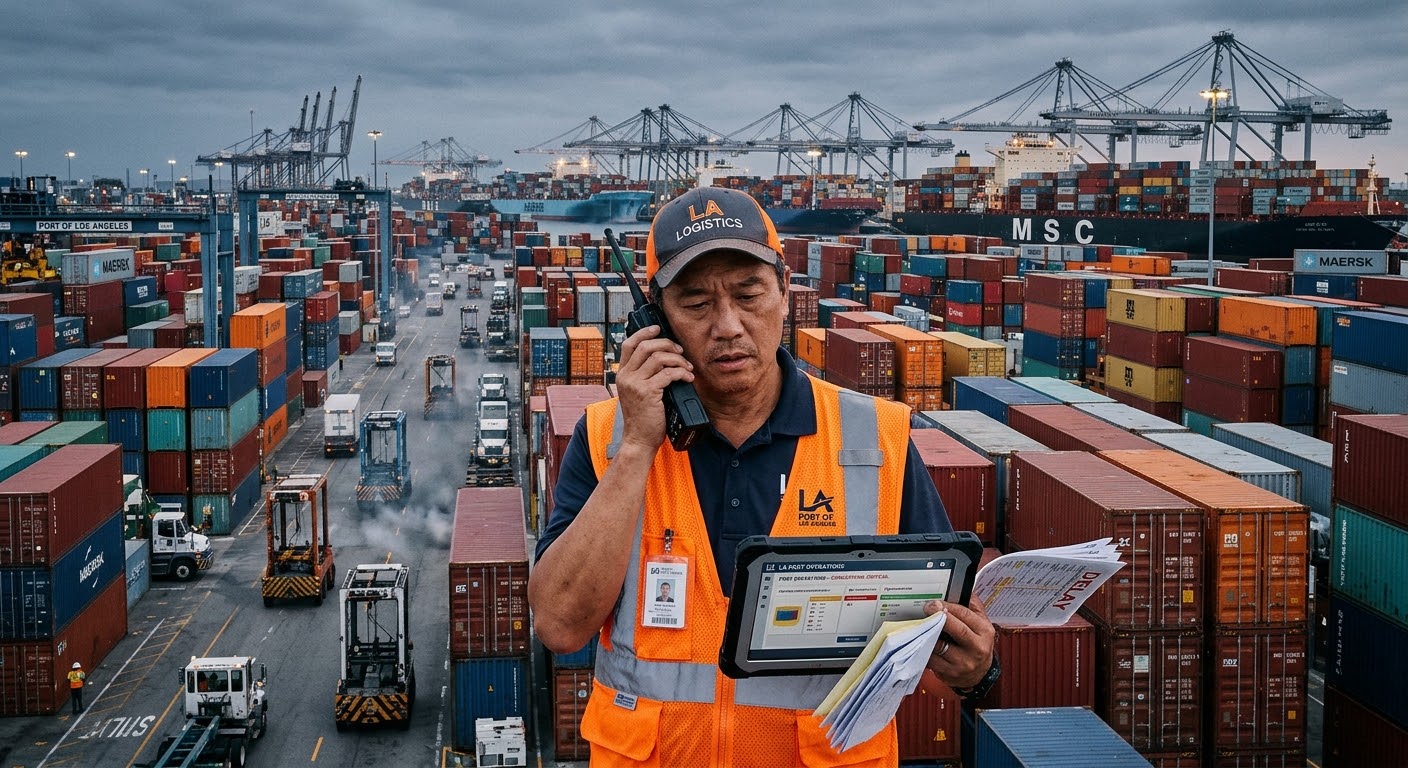 |
| Container delays at U.S. West Coast gateways like Los Angeles and Long Beach are driven by terminal bottlenecks, equipment turnover inefficiencies, and labor factors, often resulting in heavy demurrage and detention fees for shippers. |
That answer is costing you trust — because it doesn't actually tell you anything. Congested where? Waiting to discharge? Waiting for customs? Waiting for a truck that never got booked? If nobody can say which link in the chain is broken, nobody can fix it.
Here's what's really happening at LA/Long Beach, and why your container might be sitting there even though it "arrived."
Reason #1: The pressure isn't just at the port — it's on the rail
Los Angeles and Long Beach are the biggest gateway for Asian imports, and when peak-season volume hits, everything downstream strains: discharging, yard turnover, and pickup scheduling. But here's the part importers miss: not every container leaves by truck. A big share moves onward by rail to inland points and the East Coast — and that rail connection has been the weakest link.
According to port data, truck dwell time in September was about 3.18 days at LA/Long Beach, while rail dwell time ran about 7.19 days — both worse than in August. In plain English: even when your container is off the ship and cleared, it can wait a week or more for a railcar if its destination is inland.
So if your cargo has reached the port but keeps missing its inland delivery date, your forwarder may not have failed you — the rail handoff is simply backed up.
Reason #2: The Panama Canal is quietly changing routing math
This one confuses importers, but it belongs in the picture. The Panama Canal Authority adjusted daily transit slots in September because rainfall in the canal watershed ran below expectations. That changes sailing schedules and route planning for some services.
Here's the discipline worth keeping: that does not mean every East Coast-bound shipment suddenly diverted to the West Coast, and it certainly doesn't mean West Coast volume jumped 15% because of it. Actual routing depends on carrier decisions, origin and destination ports, and the specific service. Don't let anyone connect unrelated market rumors into a made-up cause-and-effect story.
Reason #3: More truck inspections are shaking up drayage
The US has been running multi-agency enforcement waves on commercial trucks this year — involving the FMCSA, homeland security agencies and state police — checking driver qualifications, CDLs, vehicle safety and driving records. That affects how some carriers and drivers schedule their work.
But again, the real bottleneck in most pickup delays is simpler: is there a chassis? Is there a driver? Does the terminal appointment calendar have an opening? Plenty of importers are living through the classic trap — the container is released, but no truck is available; or the truck shows up, but the terminal appointment doesn't. That's the granular problem a good logistics partner actually solves.
And no, it's not "the bridge"
You may have heard that the Vincent Thomas Bridge renovation is the culprit. It's not — at least not yet. The bridge will fully close on November 7 for a major rebuild, and surrounding traffic is already being adjusted in the run-up. It can affect local transport around the port, but it can't explain today's dwell times on its own.
How to answer a customer (or yourself) when pickup is slow
Instead of "port congestion," ask — and demand — answers to three questions:
- What's the container's actual status? Discharged? Cleared by customs? Released by the terminal?
- Is the pickup appointment booked? If it's released, has the drayage company confirmed a truck, a chassis, and a terminal appointment date?
- Is the downstream leg affected? For rail cargo, what's the rail status and expected transit? For truck delivery, what's the promised pickup and warehouse delivery time?
Only when you break the process into these nodes can you actually tell anyone where the problem is. That's the difference between a forwarder who says "still in queue" and one who tells you: where your cargo is, why it's slow, what happens next, and how long it should take.
The bigger lesson
For US importers, the journey doesn't end when the ship ties up at the dock. Port, rail, trucking and warehouse appointments all have to line up — and if any one of them slips, your delivery date slips with it. The fastest fix is to shorten the part of the chain you can control: get cargo across the ocean faster, on a service with priority unloading, so there's less total time exposed to the bottlenecks.
Tired of cargo that "arrives" and then disappears?
STU Supply Chain's Matson Express is built for exactly this problem: fast sea freight from China to USA in roughly 11–15 days port-to-port, priority offloading at Matson's dedicated Long Beach pier, and DDP door-to-door in 15–22 days — with a schedule commitment and real-time tracking at every handoff.
WhatsApp +86 136 6226 6273 or email sales@stusupplychain.com — itemized quote within 24 hours.


Comments
Post a Comment