US West Coast Port Strike Alert
Two hundred and fifty people. That's roughly how many port security and gate guards could shut down the largest gateway for Asian imports into America.
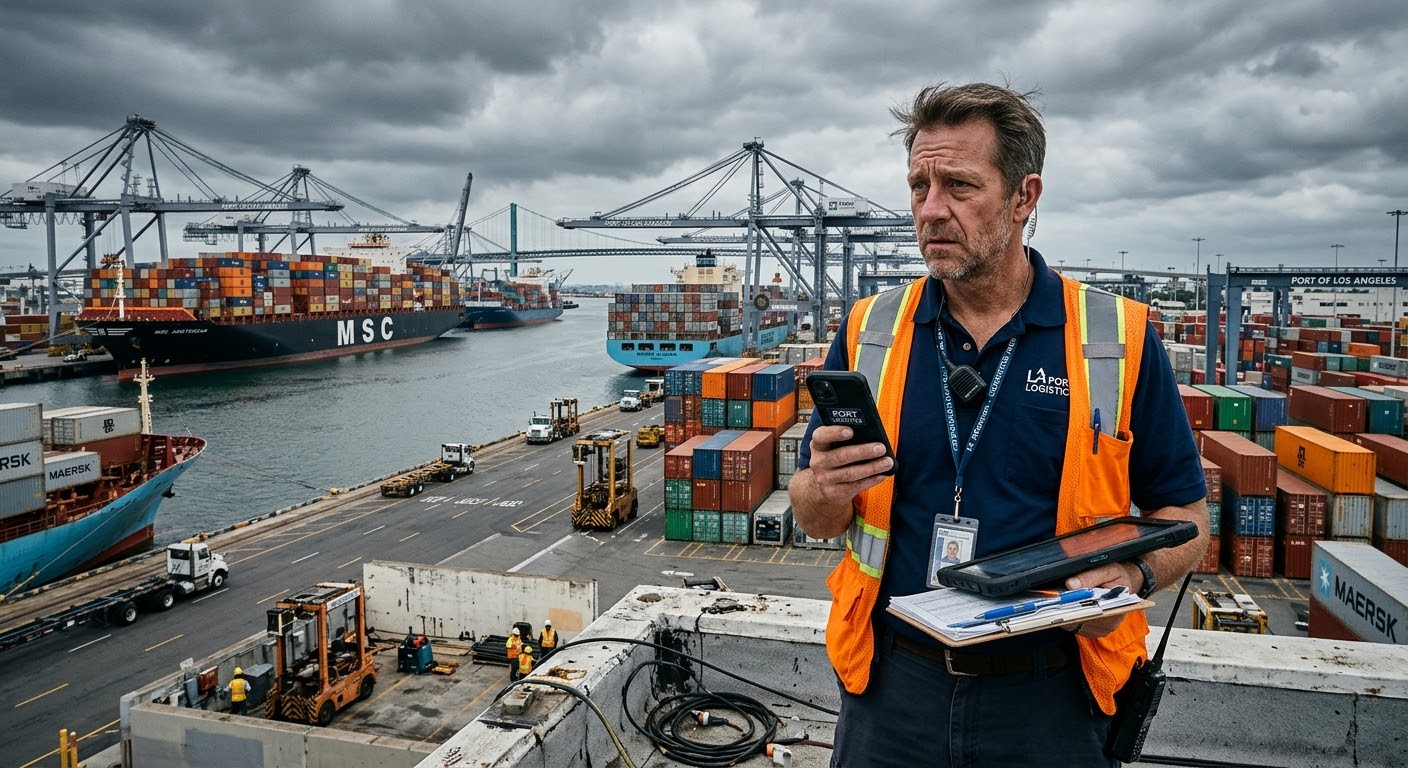 |
| Amid ongoing labor negotiations and looming strike threats at major U.S. West Coast gateways like Los Angeles and Long Beach, supply chain professionals face mounting pressure over potential cargo delays and terminal disruptions. |
It sounds absurd — and it's exactly why US importers should pay attention right now.
The International Longshore and Warehouse Union (ILWU) Local 26, which represents about 250 port security and gate-control workers at Los Angeles and Long Beach, is in tense contract talks with the Pacific Maritime Association (PMA). Their old agreement expired back in July 2025, and they've been working under an extension ever since. The union has said that if no deal is reached, it could strike — potentially beginning as early as 5:00 p.m. on November 1. As of publishing, talks are still ongoing under federal mediation and no strike has been confirmed.
So why do 250 guards matter so much? Because under US maritime safety rules, a container terminal cannot legally open its gates without qualified security staff. And in a unionized port, other ILWU members typically refuse to cross picket lines — which means vessel operations, yard work and gate traffic could grind to a halt along with the security desks. PMA estimates the eight affected terminals handle roughly 85% of Long Beach's and about 33% of Los Angeles' cargo volume.
8 terminals are in the risk zone
The terminals most exposed to the dispute include the major LA/Long Beach facilities commonly referenced as APM, LBCT, TTI, PCT, C-60, A-90, LB 206 and OH 55.
Here's the part that hits home for anyone shipping from Asia: schedule-tracking data covering Chinese direct sailings to the US West Coast found that roughly 93 of 125 sailings — about 74% — call at terminals within this risk range. That's the majority of the China-to-US pipeline.
Which services should you check first
South China departures (Yantian, Nansha, Shekou, Hong Kong)
- Ocean Alliance services — AAC4, SEA, SEA3 and PVCS have sailings from South China ports touching Long Beach's LBCT terminal.
- MSC SENTOSA — Yantian to Long Beach, tied to the TTI terminal.
- Maersk TP6 and Hapag-Lloyd WC1 — Yantian to Los Angeles, calling at the APM terminal.
East and North China departures (Shanghai, Ningbo, Qingdao, Xiamen, Tianjin)
- Los Angeles APM-linked services — Ocean Alliance AAC2 and PCN3 (Shanghai, Ningbo, Qingdao, Tianjin); Gemini Alliance TP8 and WC2 (Shanghai, Qingdao); PA Alliance PS6 (Shanghai, Ningbo, Qingdao).
- Long Beach PCT-linked services — Ocean Alliance CEN and PCN1 (Shanghai, Ningbo, Qingdao, Tianjin), plus AAC and VCS with Xiamen and Ningbo calls.
- MSC ORIENT SERVICE — sailings from Shanghai, Ningbo and Qingdao linked to the PCT and TTI terminals.
One important caveat
Don't panic-read the above as "all Ocean Alliance sailings are affected." Carrier-terminal associations are a starting point for risk screening, not a verdict. Whether your specific shipment is exposed depends on the exact vessel, the voyage number, and the actual discharge terminal — always confirm those details before changing any plan.
What to do right now
- Pull up each of your shipments and verify the vessel, voyage and service code. Don't judge risk by carrier name or origin port alone.
- Confirm the discharge terminal. If your cargo is headed to APM, LBCT, TTI, PCT, C-60, A-90, LB 206 or OH 55, flag it.
- Prioritize cargo arriving around November 1. Shipments with tight warehouse appointments or delivery deadlines deserve a proactive call to your forwarder, carrier and overseas agent.
- Build buffer into your plan. Add a few days of slack to trucking, warehouse appointments and final-mile schedules, and reset customer expectations early rather than late.
- Watch the negotiations and carrier advisories. A strike can still be avoided — and even if it happens, not every service and terminal is affected equally. Follow official announcements, not rumor.
Why this matters beyond the docks
This is the port complex that moves a huge share of the goods US consumers buy — electronics, furniture, home goods, holiday inventory. If operations stall, the delay doesn't stop at the terminal gate. It cascades into trucking, warehouses, retail shelves and eventually into your inbox from a customer asking where their order is.
The lesson of every West Coast disruption is the same: when the port gets messy, the shipments that move are the ones on the most reliable services with the most committed forwarders. Speed, priority berthing and schedule accountability aren't luxuries — they're the difference between a hiccup and a disaster.
Worried about your next shipment? Don't gamble on space and schedules.
STU Supply Chain offers dependable sea freight from China to USA on Matson's fast-boat routes — roughly 11–15 days port-to-port with priority unloading at Long Beach, and DDP door-to-door in 15–22 days. We confirm vessel, voyage and discharge terminal on every booking so you always know where your cargo stands.
WhatsApp +86 136 6226 6273 or email sales@stusupplychain.com — itemized quote within 24 hours.


Comments
Post a Comment