Navigating DDP Shipping from China to Germany: How German Importers Eliminate Customs Risks & Hidden Costs
For German importers and e-commerce sellers sourcing products from China, operational efficiency and strict legal compliance are non-negotiable. However, navigating cross-border logistics between China and Germany often presents significant challenges—ranging from unpredictable Zoll (customs) delays and complex EU VAT (Einfuhrumsatzsteuer) calculations to hidden destination charges.
To streamline supply chain operations and ensure door-to-door reliability, more German businesses are turning to DDP (Delivered Duty Paid) shipping. Under DDP terms, the freight forwarder or supplier handles every step of the transit—including China export clearance, international freight, German import clearance, customs duties, 19% VAT, and final truck delivery to your door or Amazon FBA warehouse in Germany.
Why German Importers Prefer DDP Shipping
1. Zero Surprise Costs: All customs duties, tariffs, local handling, and German VAT are calculated and paid upfront. This guarantees total cost predictability before goods leave China.
2. Hassle-Free Customs Clearance: Germany’s Zollamt enforces strict import regulations (such as CE marking, REACH compliance, and correct EORI registration). Professional DDP providers manage all documentation to prevent cargo holds at major hubs like Hamburg Port or Frankfurt Airport.
3. End-to-End Door-to-Door Service: Freight moves seamlessly from suppliers in Shenzhen, Ningbo, or Shanghai directly to your warehouse in Berlin, Munich, or Duisburg without requiring local broker intervention.
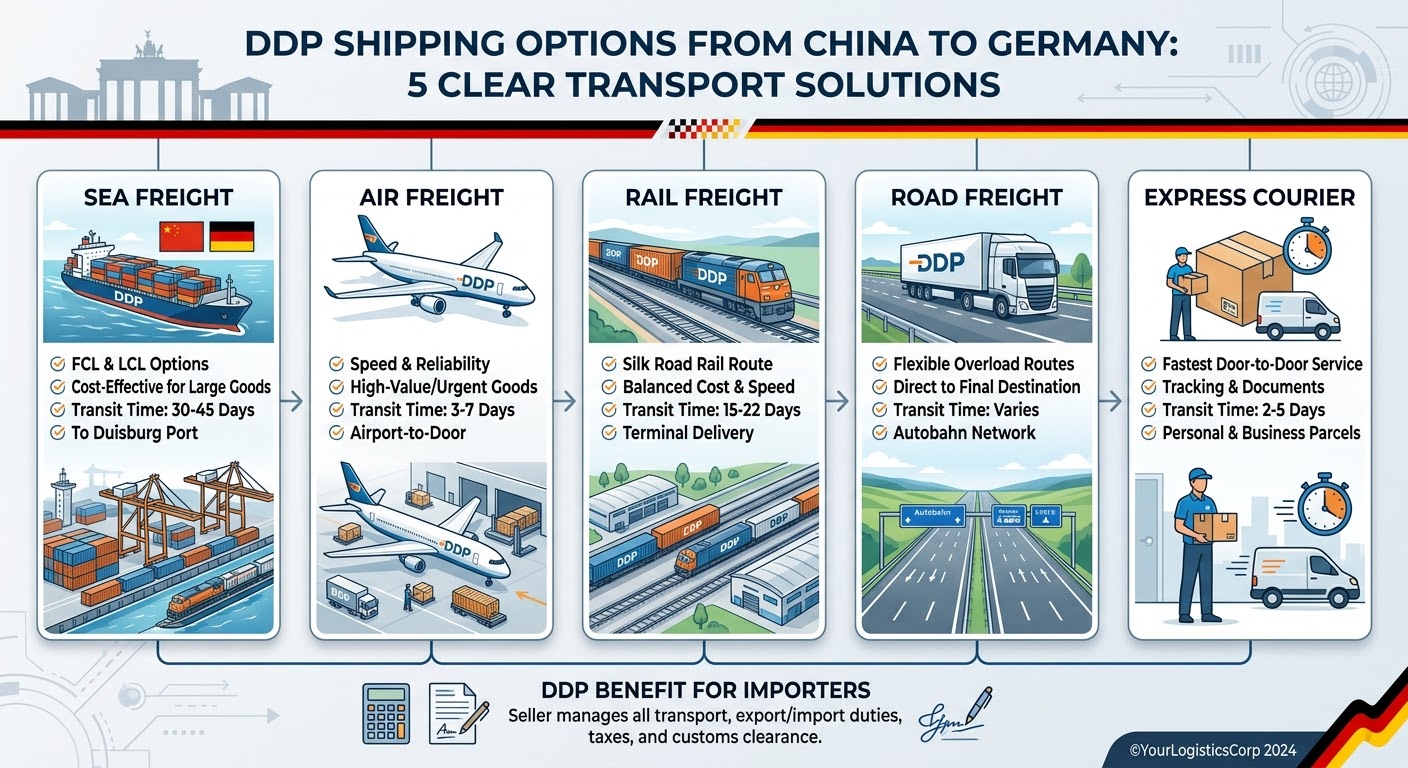
5 DDP Shipping Routes from China to Germany
Depending on your budget, cargo volume, and transit urgency, five primary transport modes offer tailored DDP solutions:
• 1. Sea Freight DDP (FCL/LCL): The most cost-effective solution for high-volume or heavy industrial goods. Shipping via major ports (e.g., Shanghai to Hamburg) typically takes 30–45 days.
• 2. Air Freight DDP: Ideal for high-value cargo, seasonal inventory, or urgent restocks. Cargo lands at hubs like Frankfurt (FRA) or Leipzig (LEJ) with door-to-door delivery within 5–10 business days.
• 3. Railway DDP (China-Europe Express / New Silk Road): A popular middle ground between sea and air freight. Rail transport to German terminals like Duisburg or Hamburg takes approximately 18–25 days at a fraction of air freight costs.
• 4. Truck Freight DDP (Road Transport): A flexible overland route offering door-to-door connectivity across Eurasia, serving as an excellent alternative during peak seasons.
• 5. Express Courier DDP: Best suited for small parcels, urgent samples, or lightweight packages requiring rapid delivery with minimal paperwork.
For a deeper analysis of transit times, cost breakdowns, and compliance facts for each method, check out the comprehensive guide on 5 DDP Shipping Options from China to Germany: Surprising Facts You Need to Know.
Key Considerations Before Signing a DDP Agreement
To protect your business and ensure smooth operations:
• Verify Full Compliance: Ensure your forwarder provides proper import tax records to avoid accounting issues with German tax authorities (Finanzamt).
• Confirm Complete Door-to-Door Delivery: Verify that the rate covers final mile trucking to your specific postal code, rather than stopping at a bonded warehouse near the port.
• Partner with Specialized Freight Forwarders: Choose logistics partners with proven experience on the China-to-Germany trade lane.
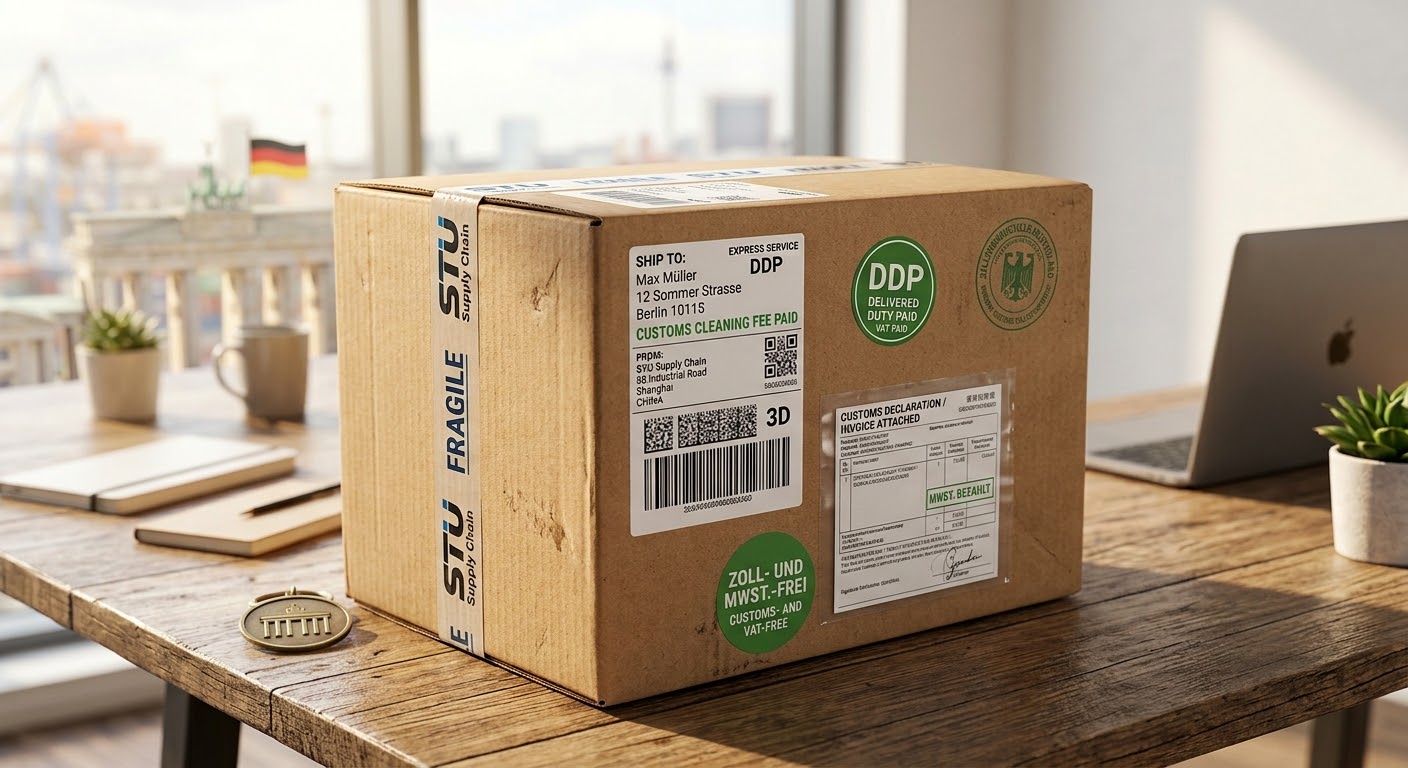
By selecting the right DDP transport option, German businesses can lower operational overhead, protect profit margins, and guarantee dependable delivery schedules.


Comments
Post a Comment