ONE Rolls Out Cargo Receiving Date (CRD) Pricing Rule for Europe & Africa Exports: What Shippers Need to Know
A major shift in ocean freight pricing logic is here. Effective September 1, 2026, Ocean Network Express (ONE) is officially replacing the traditional Proforma ETD pricing benchmark with the Cargo Receiving Date (CRD) for export cargo originating from Europe and Africa.


If you are an exporter, freight forwarder, or supply chain planner, this policy change directly impacts your rate validity, booking timelines, and shipping costs.
What Changes? Proforma ETD vs. Cargo Receiving Date (CRD)
For years, ocean freight rates, surcharges, and local fees were locked based on the vessel’s projected departure date (Proforma ETD). Under the new CRD framework, your freight rates will be determined by when the carrier physically receives your cargo.
| Delivery Method | New Rate Determination Benchmark (CRD) |
| CY (Container Yard) Delivery | Calculated based on the Actual Gate-In Date at the origin terminal/inland depot. |
| Door Delivery | Calculated based on the Confirmed Actual Pickup Date noted on the Transport Request Order (TRO). |
Key Transition Rule: All cargo received by ONE on or after September 1, 2026, will be subject to the new CRD pricing. Shipments gated-in or picked up prior to September 1 will remain under legacy Proforma ETD rules.

For years, industry players have relied on the Proforma Estimated Time of Departure (Proforma ETD) — the projected vessel sailing date — as the benchmark to trigger base ocean freight, surcharges and local charge applicability. This familiar yardstick is about to be displaced. Under the brand‑new Cargo Receiving Date (CRD) framework, pricing validity will hinge on when the carrier physically takes possession of your goods, rather than when your ship is scheduled to cast off. This seemingly subtle switch carries far‑reaching ripple effects for shippers, freight forwarders and logistics teams. As ONE’s key authorized agent, STU specializes in sea freight booking services from China to the US, Canada and Europe. Keeping close track of ONE’s latest policy iterations, STU helps clients navigate these complicated pricing adjustments and avoid unexpected cost risks brought by rule changes.
So how exactly will this new pricing mechanism work for your shipments? Two core delivery scenarios draw clear‑cut rules:
CY (Container Yard) Delivery: The applicable rate will be determined by the actual container gate‑in date — the exact day your container rolls into the origin terminal or inland depot, not the planned sailing day.
Door Delivery: Pricing follows the confirmed actual pickup/loading date documented in the Transport Request Order (TRO), the moment cargo is collected for transport.
Critical transition fine print you cannot afford to overlook: All cargo received by ONE on or after September 1, 2026 will fall under the new CRD pricing regime. Shipments already accepted by ONE prior to this effective date will continue to abide by the legacy Proforma ETD rules, giving businesses a narrow transition window to adjust workflows.
This is not ONE’s first roll‑out of the CRD model. Few market observers may realize this pricing logic has already been operational across multiple key trade lanes. It has long been enforced for US‑related trades regulated under the Federal Maritime Commission (FMC), Canada’s import and export flows, select intra‑trade routes along Latin America’s East Coast, as well as exports originating from India and Pakistan. Now the carrier is expanding this proven model, bringing Europe and Africa exports into the CRD fold. This begs a thought‑provoking question: Which trade corridor will be next on the CRD expansion roadmap?
It is worth noting that for non‑FMC trade lanes excluded from this round of policy roll‑out, ONE clarifies that rates will in principle still reference the published Proforma ETD of the first loading vessel.
This paradigm shift forces every logistics stakeholder to rethink booking rhythms, cargo staging schedules and cost forecasting. Miss the timing mark, and you could face unexpected rate fluctuations. Is your team prepared to adapt to this new reality before September 1 arrives?
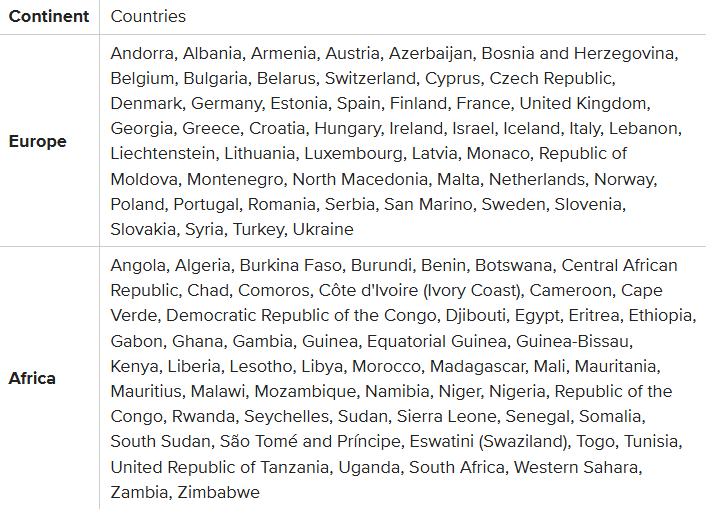
This policy expansion now covers export cargo out of Europe and Africa. The applicable regions are as follows:


Comments
Post a Comment