Global Perfectionism Anxiety Hits an All-Time High
Have you ever had such moments: even when you’ve done a great job, you still fear making mistakes; you hesitate to start a task not out of laziness, but the worry that you cannot deliver flawless results. A growing body of research indicates that perfectionism has become a prevalent source of stress among young people. What truly traps us is not high standards themselves, but the tendency to interpret a single misstep as proof that we are inadequate.

Today we will discuss how to release ourselves from this state of constant tension: ease overall stress, build relationships and hobbies unbound by performance metrics, embrace low-stakes failures, and learn to treat ourselves with the same compassion we’d offer a friend. Allowing rough edges in life does not mean giving up self-improvement; instead, it grants us greater strength to forge ahead.
1. Two Types of Perfectionism
Some may argue there is already an abundance of analysis and books covering perfectionism, so is another discussion necessary? The answer is yes, as the situation has grown unprecedentedly severe.
In 2026, Psychological Bulletin, a top journal under the American Psychological Association, published research led by Thomas Curran, a psychology professor at the London School of Economics. The study tracked data over 35 years, from 1989 to 2024.
Its conclusion: levels of perfectionism among contemporary college students are rising at the fastest recorded rate, to the point that researchers label it a "public health crisis."
Though conducted by American scholars, the research drew data from more than 80,000 college students across the UK, the US and Canada, all three nations showing identical upward trends. Researchers identified shared economic shifts starting in the 1980s as key drivers: widening wealth gaps, fiercer job competition, and overemphasis on personal achievement.
You may wonder if data from Western countries applies to us. Let us turn to Asian research. A June 2026 report in Nautilus, titled How the Perfectionism Pandemic Is Crushing Young Adults, confirmed widespread perfectionism in Japan, China and Singapore.
East Asia is dominated by socially prescribed perfectionism — internalized pressure stemming from others’ expectations that we must be perfect, rather than simply high self-demands. Studies show this variant inflicts severe harm on mental health. A 2025 study comparing college students from China, Kazakhstan and Russia found Chinese participants scored markedly higher on socially prescribed perfectionism.
This is not a distant issue. Perfectionism is spreading across cultures in distinct forms.
Many question why pursuing perfection would be deemed a public health emergency, calling for a critical distinction laid out in a 2025 article in Frontiers in Psychology, which categorizes perfectionism into adaptive and maladaptive forms.
Adaptive perfectionism centers on the desire to excel: individuals hold high standards yet accept setbacks, adjust and keep moving forward. Maladaptive perfectionism revolves around fear of failure: while standards are equally high, any deviation is catastrophized as personal defeat, leaving people convinced they are worthless.
Simply put, one strives to win, the other fears losing. The divide lies not in how lofty standards are, but how missteps are interpreted. Harmful perfectionism stems not from rigorous expectations, but from catastrophic thinking around imperfection — the focus of our discussion today.
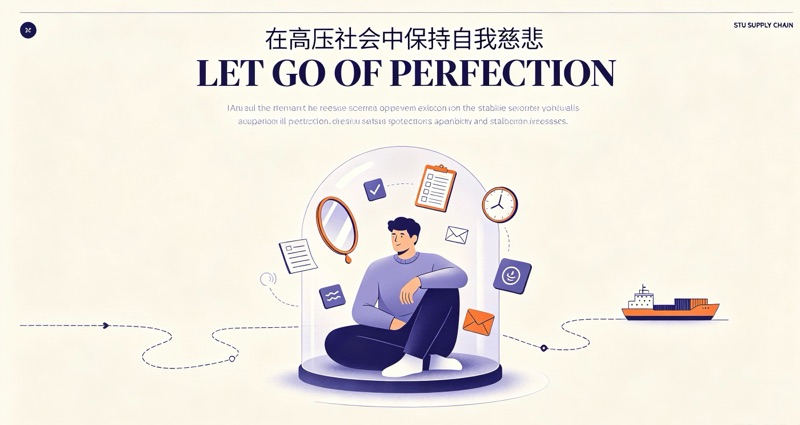
This distorted mindset triggers two major outcomes: procrastination, driven by terror of disastrous failure, and rigid thinking, where people cling rigidly to a single plan, viewing any adjustment as a rejection of their prior efforts.
2. Ease Overall Stress Instead of Fighting Perfectionism Head-On
What solutions exist? Exposure therapy was once popular in psychology for treating perfectionism. Its logic: repeatedly expose people to minor failures to train the brain to recognize that setbacks are not catastrophic — for example, leaving typos uncorrected or arriving five minutes late.
Yet this method yields limited results, per a 2024 randomized controlled trial. Researchers split perfectionist participants into two groups: the first underwent intentional error exposure training, while the second received general stress management including breathing exercises, sleep optimization and daily stress relief.
The stress management group saw superior improvements across all four metrics: perfectionist tendencies, depression, general anxiety and social anxiety.
In short, mitigating overall stress is more effective than directly combating perfectionism. Perfectionism is deeply intertwined with chronic stress. Under prolonged pressure, the brain activates threat mode, with perfectionism acting as a defensive mechanism: the subconscious belief that absolute perfection shields one from criticism and harm.
Thus, the first step to easing perfectionism is lowering baseline stress through sleep improvement, regular exercise and limiting information overload — simple practices backed by solid scientific mechanisms.
3. Intentionally Create Scenarios for Low-Stakes Failure
Stress reduction is merely the starting point; more targeted strategies help address perfectionism at its root, such as cultivating non-utilitarian environments.
Professor Curran’s research frames perfectionism as a collective societal issue requiring collective remedies rather than individual coping alone. Modern society ties human connection almost entirely to personal accomplishments, defining people by what they achieve rather than who they are.
Paul Hewitt, a leading clinical psychologist from the University of British Columbia specializing in perfectionism research, notes most perfectionists hold an ingrained childhood belief: mistakes render them unlovable. Even as adults free from parental or teacher judgment, this automatic thought pattern persists.
Researchers propose building small, achievement-independent social bonds: weekly deep conversations with two or three contacts who do not judge your accomplishments. It is equally vital to disengage from toxic information ecosystems — platforms that only showcase success without sharing struggles, reward progress yet never tolerate failure. Unfollow such accounts and exit problematic group chats.
Additionally, take up non-productive hobbies: pursuits unlinked to income or self-validation, activities you never aim to master.
Another strategy is designing low-stakes failure scenarios, distinct from forced error exposure therapy. Deliberate mistakes feel like rehearsed training with no real repercussions, so the brain learns no genuine lessons. Low-stakes failure requires sincere participation in activities with authentic failure risks yet minimal negative fallout. Three guiding principles apply:
1. Genuine engagement, not performative practice;
2. Real possibility of failure, avoiding guaranteed success;
3. Negligible consequences — failure cannot harm income, key relationships or physical health.
Examples include learning a sport where you lack natural talent, joining an amateur competition beyond your skill level, or posting unfinished hobby creations on social media. Experiencing real failure and discovering its triviality rewires the brain’s catastrophic bias linking setbacks to ruin.
Self-compassion training is another evidence-backed technique, far more concrete than vague self-care mantras. Dr. Kristin Neff, a University of Texas professor pioneering self-compassion research, has proven consistent practice drastically reduces anxiety and depression in perfectionists. Those with high self-compassion maintain lofty standards without spiraling into mental distress.
Self-compassion does not mean lowering standards or indulgence; its core exercise is simple reflection: what would you say to your closest friend facing the exact same failure or hardship? Almost everyone speaks far more gently and rationally to friends than to themselves. Self-compassion means extending that same understanding inward.
4. Embrace Life’s Rough Edges
To summarize: 2026 research confirms perfectionism is spreading faster than ever on record. It is not a pursuit of excellence, but paralyzing fear of failure amplified by chronic stress. Four actionable approaches help manage it:
1. Reduce overall stress rather than suppressing perfectionist thoughts directly;
2. Nurture relationships and hobbies unconnected to achievement;
3. Seek out controlled low-risk failure opportunities;
4. Practice self-compassion, treating yourself as kindly as you would a friend amid setbacks.
The poet Rainer Maria Rilke wrote: “You must be patient with all the unresolved questions in your heart and try to love the questions themselves.”
If this line feels overused, we can reframe the idea: strive to retain your humanity, which means permitting life to bear rough edges. Perfectionism demands you resemble a flawlessly decorated house with seamless corners, while humanity reveals water rings on tables and creases on sofas. These are not blemishes, but proof of a life fully lived.
STU Supply Chain’s Perfectionism Anxiety Also Hits an All-Time High
Much like how people fall prey to crippling perfectionist anxiety over trivial slip-ups, logistics leaves zero room for oversights. At Haituo STU, we safeguard quotation services for every client’s cargo around the clock, maintaining constant vigilance over all shipments. Delivering your goods on schedule is our core mission. We relentlessly push for faster transit times. Though we stay vigilant and attentive throughout the whole logistics journey, we deliver thoughtful, dedicated service to every customer, earning widespread recognition for STU’s reliable support.
If you are searching for a trustworthy logistics service provider based in China, please visit our official website: www.stusupplychain.com


Comments
Post a Comment