Mass Cargo Blocked From Loading – 2R Interception Crisis Hits US Ocean Lanes
Mass Cargo Blocked From Loading – 2R Interception Crisis Hits US Ocean Lanes
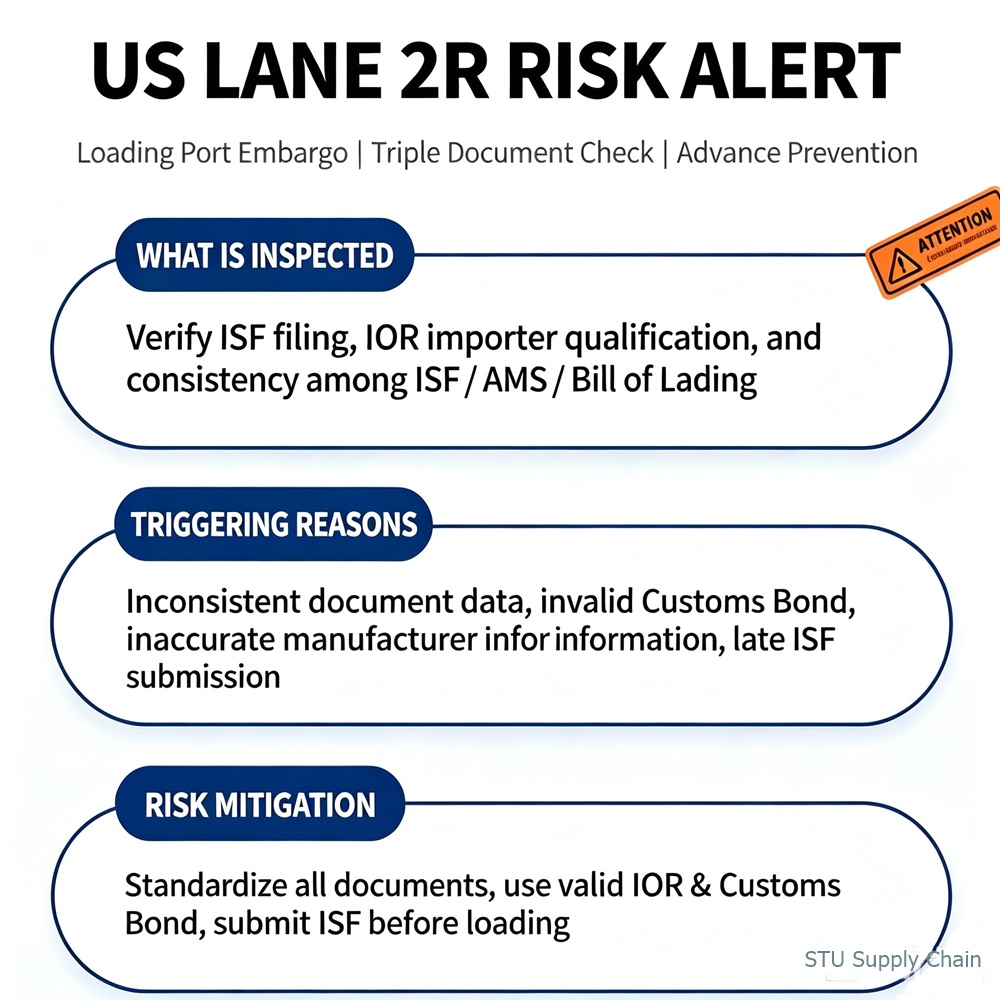
US customs inspections on inbound ocean freight have reached an unprecedented strict level in 2026, triggering continuous turbulence across the US cross-border logistics industry.
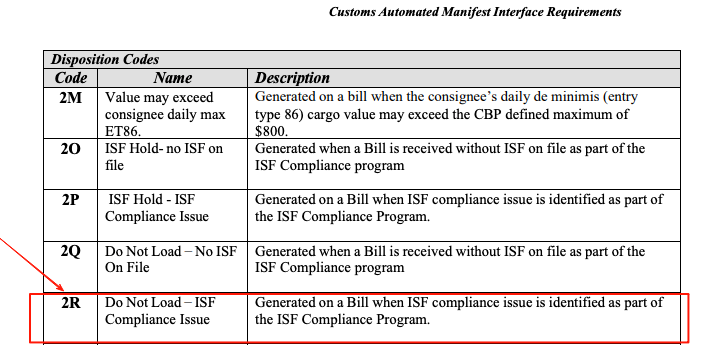
Shortly after large-scale 5H and 9H destination port examinations rolled out at the start of the year, a new wave of 2R pre-loading interception directives has swept the industry recently. Thousands of cross-border sellers have faced brutal scenarios where their containers get blocked from loading right at the origin port, even after completing standard AMS manifest submissions and mandatory ISF filings.
This pre-shipment hold leads to severe vessel schedule delays, surging miscellaneous port charges, and crippling monetary fines, leaving countless US e-commerce merchants struggling with heavy operational losses. If you want to eliminate 2R compliance risks and stabilize your US ocean shipping schedule, visit our compliance-focused logistics portal: www.stusupplychain.com for end-to-end US lane freight consulting and risk mitigation support.
What Exactly Is CBP 2R Interception?
Many importers mistakenly view 2R as a brand-new CBP policy, yet this disposition code has been active within the CBP ACE system since 2010. Its official full name is Do Not Load – ISF Compliance Issue, meaning carriers receive formal orders to refuse loading any cargo flagged with unresolved Importer Security Filing (ISF, also known as the 10+2 filing) compliance violations.
CBP sends direct vessel loading bans to ocean carriers for 2R-tagged shipments; containers cannot board vessels under any circumstance until you resolve all compliance defects and obtain the critical 4R removal code to lift the hold.
It is critical to distinguish 2R from 5H and 9H examinations, a common source of confusion for most sellers:
• 2R Code: Controls whether cargo can depart the origin port – pre-shipment data audit targeting filing accuracy and importer eligibility, blocking shipments before loading.
• 5H / 9H Codes: Control whether cargo can clear customs at destination ports – physical cargo inspections executed only after vessels arrive at US terminals.
This regulatory shift marks a fundamental overhaul of US import risk control: CBP has upgraded its oversight model from post-arrival random checks to full-chain pre-shipment risk prevention. The 2R interception wave stems directly from CBP drastically raising the priority of automated 2R screening in 2026, shifting from occasional random audits to real-time, AI-powered auto-blocking for all non-compliant shipments.
Top 3 Triggers for Frequent 2R Flagging (Most Overlooked Compliance Loopholes)
Based on real industry shipment cases, 2R holds stem from three concentrated compliance failures that sellers frequently neglect in daily US shipping operations:
1. Data Discrepancies Across Three Core Documents (Most Common Trigger)
Any mismatch between key data fields on ISF filings, AMS vessel manifests, and Ocean Bills of Lading will trigger instant automated interception. Conflicting buyer/seller addresses, manufacturer factory details, HTS tariff codes, container numbers, voyage data, or even minor spelling errors will be flagged by CBP’s cross-reference algorithm.
2. Invalid Importer of Record (IOR) Entities & Expired Customs Bonds (Primary Cause of 2R Surge in 2026)
CBP is purging inactive and invalid importer records en masse this year. Common violations include falsified IOR registration data, expired or revoked EIN tax IDs, lapsed Customs Bond coverage, or insufficient Bond credit limits – these account for the majority of recent mass 2R blocks across Asia origin ports.
3. ISF Filing Timetable Violations
Federal rules mandate complete ISF submission a minimum of 24 hours prior to vessel loading. Last-minute filings or repeated late revisions to critical ISF data right before cutoff will automatically trigger a 2R hold, with zero tolerance for rushed filings.
Severe Consequences of Ignoring 2R Compliance Risks
The penalties for 2R violations are far costlier than standard 5H/9H destination port inspections, with cascading financial and reputational damage for your cross-border business:
• Origin Port Detention Before Loading: Containers get locked at the terminal, accumulating daily container detention fees, storage surcharges, and document amendment costs. Typical vessel delays range from 7 to 14 days, completely disrupting seasonal inventory planning and Amazon FBA restock timelines.
• At-Sea & Destination Port Seizure: If system lag allows non-compliant cargo to load before the 2R alert activates mid-voyage, CBP will seize the entire container upon US arrival and move it to secured customs storage. Violators face mandatory fines ranging from $5,000 to $10,000 per shipment. Extended detention can generate port fees exceeding the total value of your goods.
• Long-Term Importer Blacklisting: Any entity tied to repeated 2R violations will be marked as a high-risk account in the ACE system, subjecting all future US shipments to mandatory enhanced screening and extended clearance delays indefinitely.
Emergency Action Plan If Your Shipment Receives a 2R Hold
With 2R crackdowns now permanent industry standard, sellers need clear contingency protocols to minimize losses when flagged:
1. If cargo remains at the origin port: Immediately coordinate with your carrier to lock the container, engage a US licensed customs broker to audit all filing data, correct mismatched information, and replace invalid IOR/Bond credentials. Secure the 4R clearance removal code before rebooking vessel space.
2. If cargo is already in transit: Complete all data revisions and importer credential updates before vessel arrival at US ports to avoid post-landing seizure and steep fines. Adjust overseas warehouse and Amazon inbound schedules in advance to prevent stockouts and lost sales.
Permanent Compliance Strategy for Navigating Sustained CBP Crackdowns
Regulatory tightening across US supply chains is irreversible, spanning 5H/9H physical exams, CPSC supply chain audits, and the current 2R pre-loading interception regime. Gray-area shipping models relying on vague under-declaration or shared, unvalidated IOR/Bond credentials can no longer evade CBP’s automated screening systems. Low-cost freight channels that cut compliance corners now carry catastrophic financial risk, while industry entry barriers rise sharply: small freight forwarders lacking dedicated compliance teams cannot manage frequent customs holds and emergency resolutions, and are rapidly exiting the market.
For both large-volume brands and small-to-medium cross-border sellers, the era of gambling on cheap, unregulated logistics is over. Abandon risky low-price gray shipping routes and partner with fully compliant, stable supply chain service providers to secure dedicated, valid IOR and Customs Bond resources – the only reliable way to eliminate recurring 2R interception risks at the source.
At Stu Supply Chain (www.stusupplychain.com), our dedicated US compliance team specializes in full pre-shipment document validation, IOR/Bond credential management, ISF & AMS data cross-checking, and 2R emergency resolution support. We deliver end-to-end US ocean freight solutions built around strict CBP compliance standards, helping importers avoid costly detention, fines, and inventory disruption.
Final Industry Outlook
With US import oversight tightening across every supply chain touchpoint, sellers are advised to diversify sales channels and market portfolios to reduce overreliance on the US market’s volatile regulatory landscape. For immediate guidance on eliminating 2R compliance risks for your US ocean shipments, head to our official site: www.stusupplychain.com to connect with our US lane compliance specialists today.


Comments
Post a Comment