Air Freight Market Shifts in July 2026: What Shippers Need to Know and How to Save Costs
Air Freight Market Shifts in July 2026: What Shippers Need to Know and How to Save Costs
The global air freight market is entering a pivotal phase this July 2026. While international rates have dipped slightly for four consecutive weeks, market dynamics tell a much more complex story. From skyrocketing demand in Trans-Pacific trade lanes to changing regulations in Europe, shippers are navigating a rapidly evolving logistics landscape.
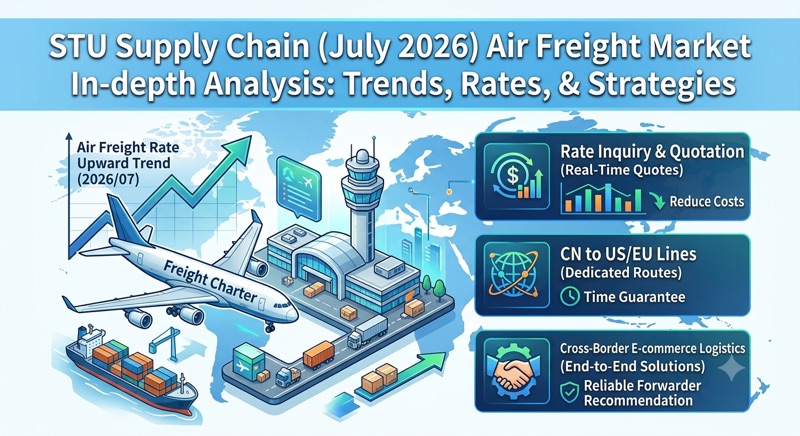
If your supply chain relies on timely and cost-effective air cargo from China, understanding these shifts is crucial to protecting your profit margins.
1. The Key Trends Shaping Air Cargo in July 2026
- Trans-Pacific Lanes are Heating Up: Fueled by a boom in AI hardware infrastructure and upcoming tariff deadlines, capacity on shipping from China to USA routes remains extremely tight.
- European Lanes are Rebalancing: Stricter EU regulatory policies on cross-border e-commerce are easing demand on Asia-Europe routes, causing rates to cool down.
- Fuel Cost Volatility: Although jet fuel prices briefly dropped last month, renewed geopolitical tensions in the Middle East are pushing fuel surcharges back up.
Market Insight: Despite recent minor drops in specific lanes, overall global air freight rates remain 17% to 24% higher year-over-year.
2. The New Growth Driver: High-Tech & AI Hardware
E-commerce is no longer the sole driver of air cargo growth. High-value tech components—specifically AI servers, semiconductors, and specialized electronics—are taking center stage.
Because these goods require high security, strict temperature control, and ultra-fast transit times, securing dedicated air freight capacity has become a top priority for global tech shippers.
3. How Shippers Can Stay Ahead (and Keep Costs Down)
Facing market volatility, waiting until the last minute to book air space can result in hefty spot-rate premiums or unexpected delays. Here is what smart shippers are doing right now:
- Locking in Hybrid/Charter Capacity: Blending contract rates with spot market flexibility to buffer against sudden rate spikes.
- Optimizing Route Planning: Utilizing alternative hub airports in China or North America to bypass congested hubs.
- Partnering with an Experienced Freight Forwarder: Working with a logistics expert who holds established carrier relationships and deep expertise in Chinese export compliance.
4. How STU Supply Chain Keeps Your Cargo Moving Smoothly
Navigating shifting air freight rates doesn't have to be a headache. At STU Supply Chain (NVOCC: MOC-NV09192 | FMC: 030310), we help businesses streamline their global logistics from China with tailored air freight solutions.
Whether you are shipping time-sensitive AI technology, Amazon FBA inventory, or high-value general cargo, STU Supply Chain offers:
- ✈️ Competitive Air Freight Rates: Direct partnerships with major airlines ensuring locked-in capacity on Trans-Pacific and European routes.
- ⚡ Express & Standard Air Solutions: Flexible transit times (from 1-3 days express to 3-5 days standard) to match your budget and urgency.
- 🛡️ End-to-End Customs & Door-to-Door Delivery: Seamless handling of export customs clearance in China and DDP/DDU delivery at destination.
Ready to Optimize Your Air Logistics for H2 2026?
Don't let market fluctuations disrupt your supply chain. Get a tailored shipping quote today!
Get an Instant Air Freight QuoteOr reach out directly to our logistics experts at sales@stusupplychain.com to discuss your custom shipping plan.


Comments
Post a Comment